The Reality of Crypto Kaito and the Future of Infofi


Update: This article was published a day before Twitter decided to ban Kaito. Almost everything in the blog is more true than before.
What is Kaito Crypto?
Kaito (Kaito Yaps) has positioned itself as a sophisticated infofi layer in the crypto ecosystem, ostensibly designed to revolutionize how information is indexed and how communities are rewarded. At its core, the idealistic version of Kaito suggests a meritocracy: a platform that systematically rewards community members who genuinely write insightful tweets for you, also the very definition of infofi, effectively eliminating the "grinders" and ensuring the best content rises to the top based on reach and engagement.

Wanna galvanize your members to create the best twitter content for you? Try our new Hype Engine X integration for free
Why is Kaito crypto gaining so much attention? The appeal lies in its promise to combat the plague of excessively low-quality content—the days where every reply under a project tweet screams "LFG" or "Good project." Spamming from InfoFi is such a big problem that Twitter recently banned Kaito (As of Jan 15).
For founders and marketers, the allure is the belief that launching a campaign on Kaito will generate a massive wave of social media momentum.
However, the real driver here is often the "Capital Launch." Most projects launching on Kaito crypto are backed by heavy hitters like a16z. These are premier projects that are often oversubscribed. Creators behave well on Kaito not just for small rewards, but because the analytics are used to whitelist users for these high-profile investment opportunities. In this article, you will learn how the "Kaito loop" actually functions, the difference between the mythology and the data, and whether it actually drives real users to your project.
Kaito Crypto Platform Overview
Key InfoFi Features and Functionality
To understand the platform, you have to look past the marketing. Kaito Yaps essentially functions as the "Uber for creators," or a Web3 version of Mechanical Turk. It connects projects with armies of freelancer creators who scroll through the earn leaderboard to decide which projects they will produce content for. While infofi refers to members getting paid for their contributions to your content, Kaito is mostly adopted by professional creators.
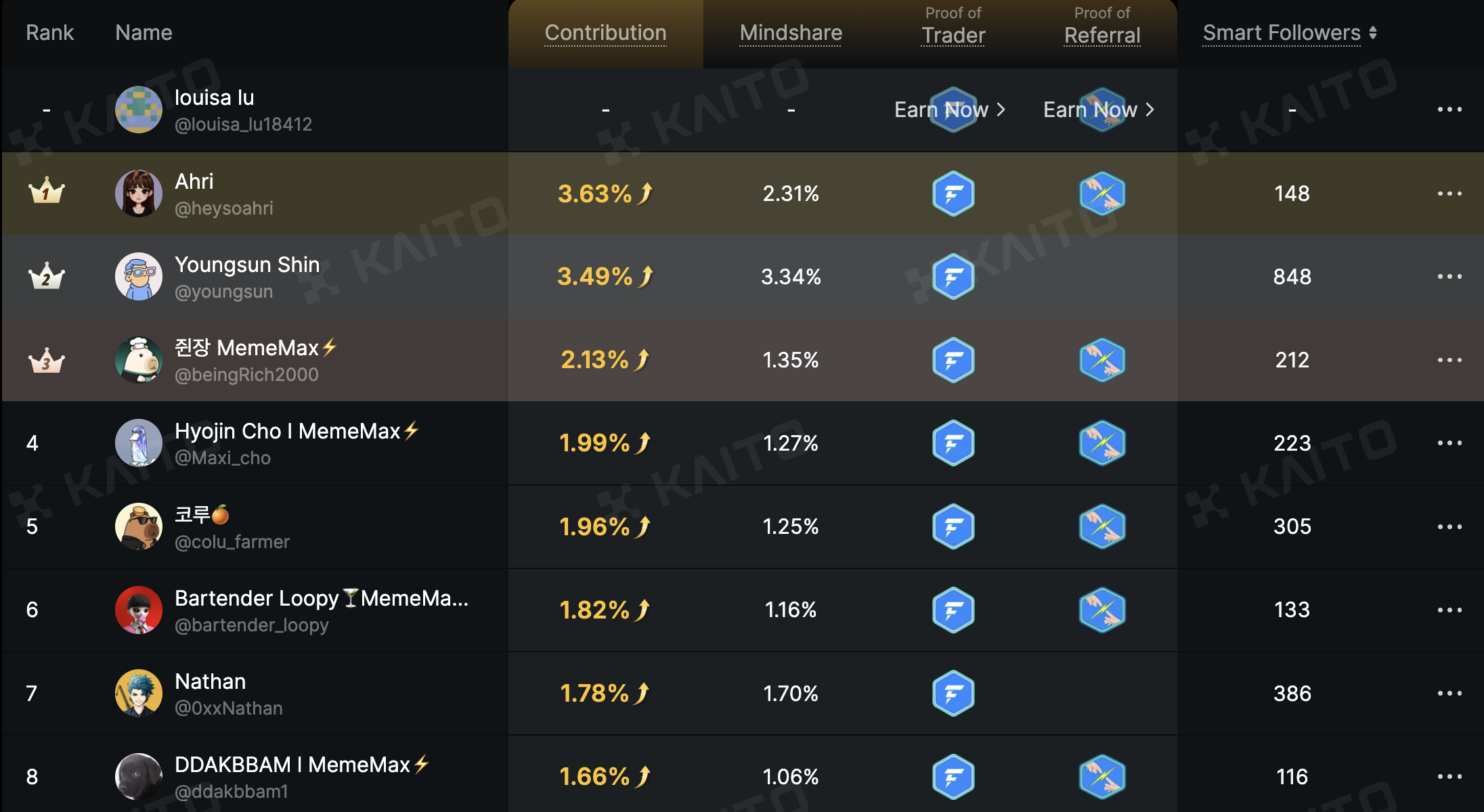
The main capability is outsourcing the "shilling" process. Instead of manually recruiting brand ambassadors, crypto projects use Kaito yaps to automate the sourcing and vetting of content creators. It differs from competitors by integrating deep analytics that supposedly differentiate between a "smart follower" and a bot, giving creators an incentive to maintain a "high quality" profile to unlock access to better deals.
How Kaito Works
The mechanism is driven by incentives, but not the way you might think. Our data analysis of various leaderboards reveals a specific workflow. Professional bounty hunters—essentially mercenary creators—scan the Kaito platform (via Kaito Earn) for campaigns paying in stablecoins (USDC).
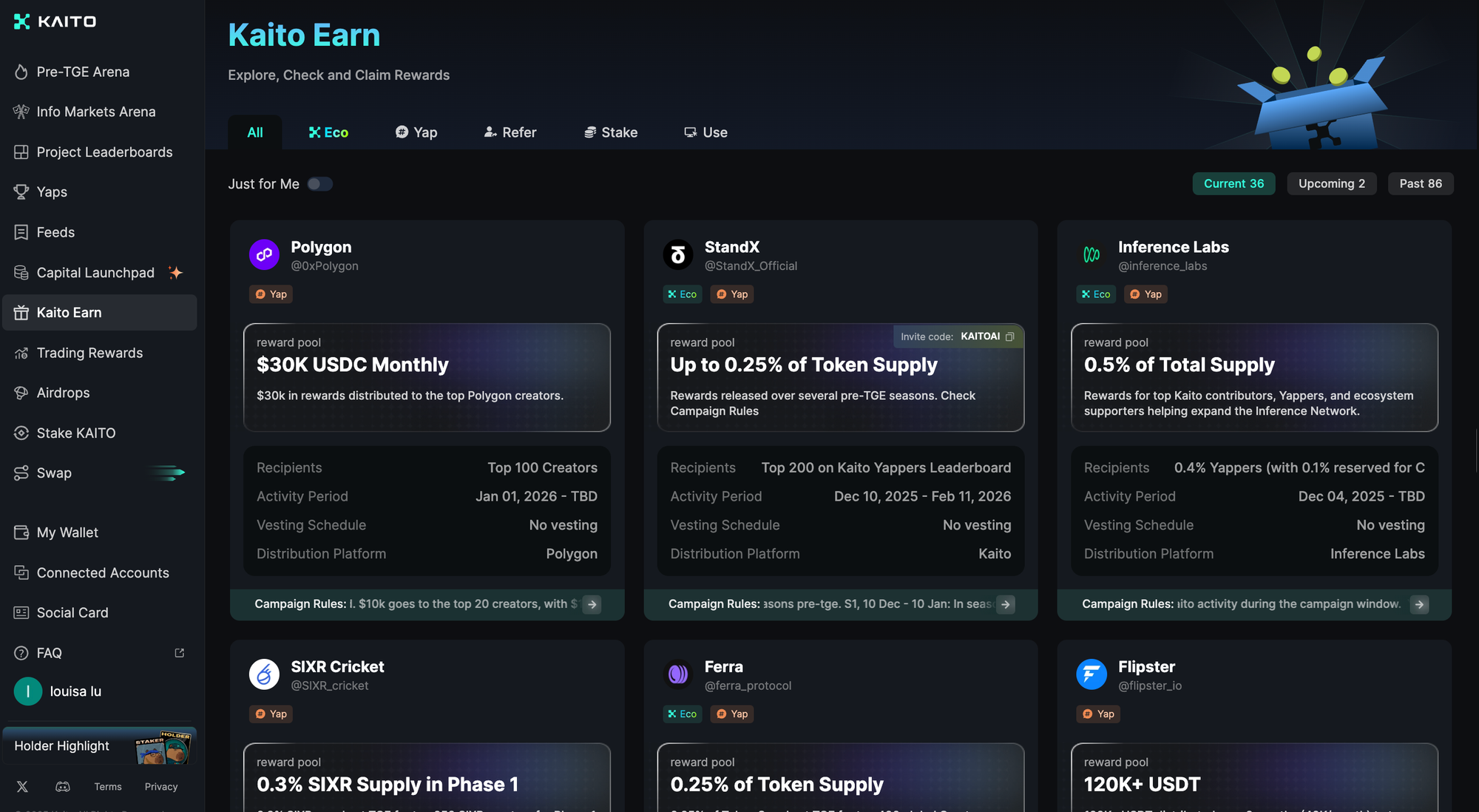
The user interface facilitates a "pay-to-play" infofi bidding system. If a project pays in USDC, creators swarm. If a small project tries to pay only in native tokens, the system largely fails. The platform encourages a loop where creators systematically produce content—often 5 to 6 tweets daily across 8 to 20 different projects—to maintain their spots on the leaderboards (more on this later in detail).
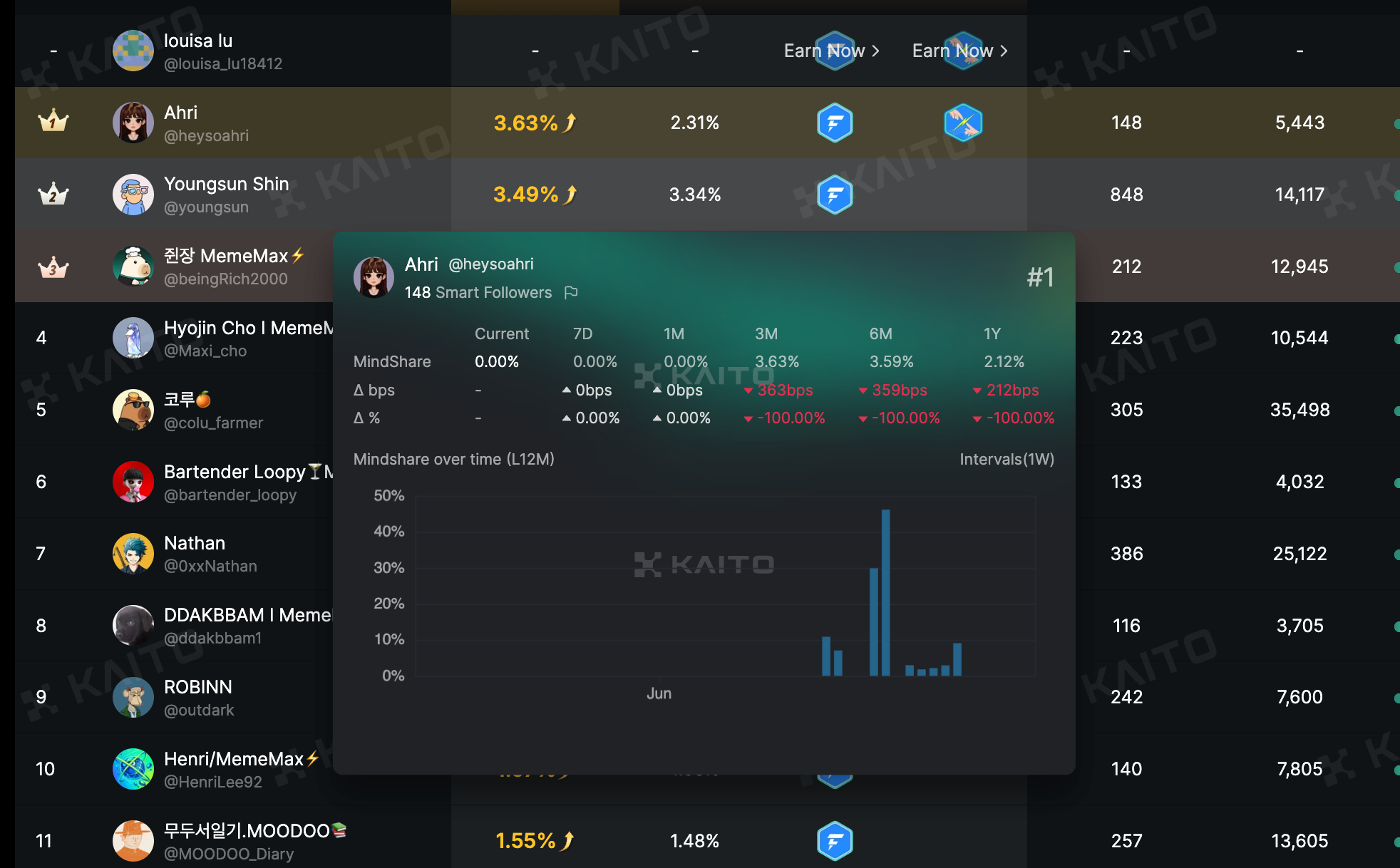
Interestingly, the algorithm seems to penalize the most obvious mercenaries; often, the number one spot on a leaderboard goes to a non-professional fan who only tweets about that specific project, rather than the industrial-scale bounty hunters.
Below shows the leaderboard for a highly competitive, all-cash reward campaign hosted by Flipster. 16/20 of the accounts on the top leaderboard are mercenary creators, but the first 2 are just superfans.
Kaito AI Crypto Integration
AI-core Algorithm to Combat Spam Issues from Infofi
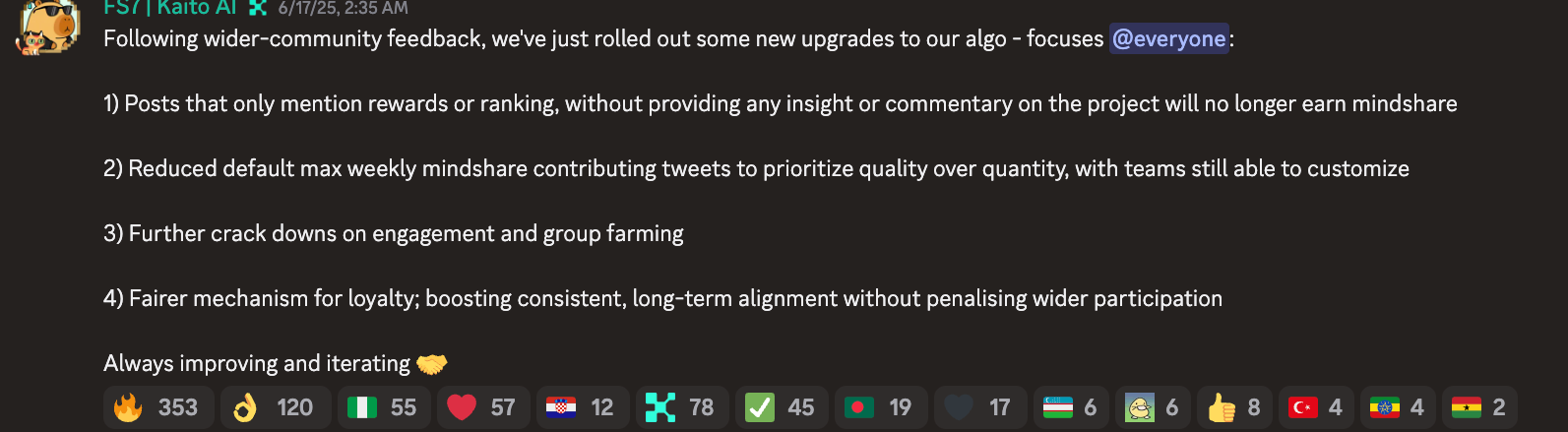
When discussing the AI capabilities of Kaito, the focus is on filtering. While the team does not explicitly mention details, AI is probably deployed to filter out the lowest tier of spam—the obvious bots and low-effort comments. It attempts to score content based on quality, ensuring that the rewards don't just go to those who tweet the most, but those who tweet the "best."
Is Kaito’s AI Advantageous?
The primary advantage of the Kaito AI implementation is automation. It saves community managers and crypto project founders from manually checking thousands of tweets. A lot of our projects spend hours manually reviewing tweets before Kaito.
However, while the AI can filter low-quality spam, it struggles to identify "professional junk."

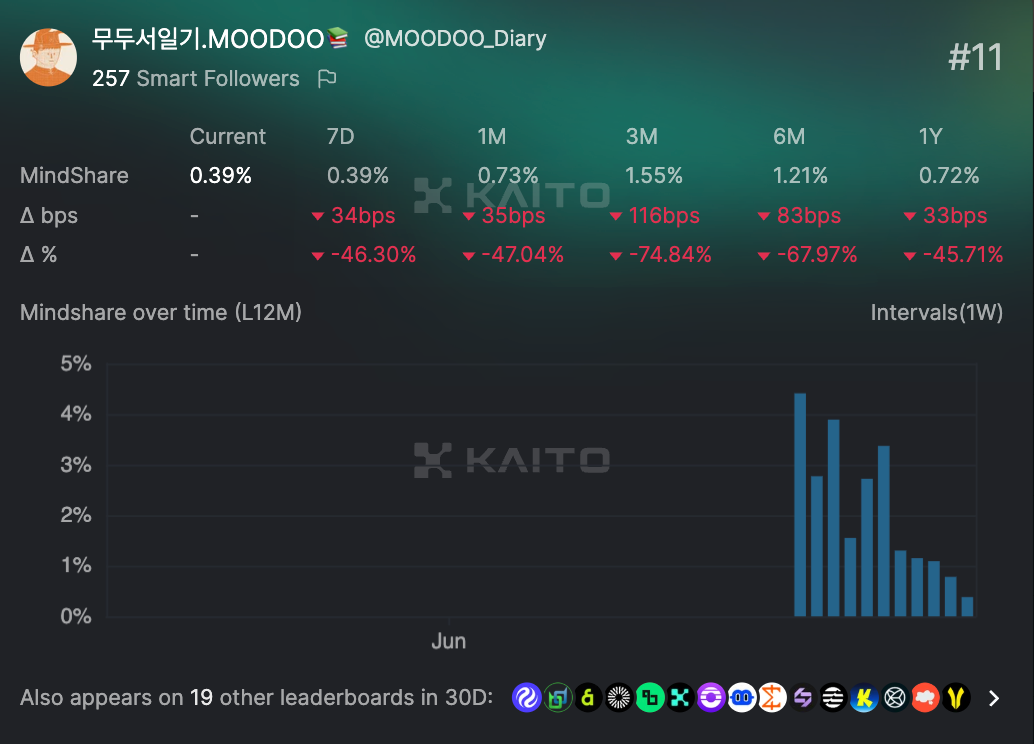
Mercenary creators have learned to game the AI. They write long-form text, properly separated, and attach media to pass the "quality" check. This results in a flood of generic content: screenshots of the product, meaningless GIFs with the brand logo, or worse—anime characters and cute girls plastered with the project's IP (often a violation). The AI detects "effort," but it cannot easily distinguish between genuine passion and a systematic, copy-paste format used across twenty different Kaito crypto campaigns. The same creator who had made the previous post is in 19 other kaito leaderboards.
The reality is that no matter how much AI tries to detect spammy content, creators or spammers always have a way to escape it (at least Kaito AI). However, it will never pass a human smell test, which is ultimately the reason why Twitter chooses to ban Kaito.
House Insights: Does Kaito work for most Crypto Communities
Methodology
Our goal is to determine whether Kaito offers value for servers of all sizes—large, medium, or small. To do this, we analyzed a sample of three emerging exchanges: two that gave out token payments and one that rewarded cash. We evaluated tweet volume, user demographics, and content quality, specifically assessing authenticity (the 'human test') and the effectiveness of the 'infofi' component. Due to Twitter API restrictions, this study relied on a manual review, scoring, and tabulation of hundreds of individual tweets.
User Reviews and InfoFi Experiences
When you look for Kaito yaps reddit threads or Discord discussions, the sentiment is mixed. Whether Kaito works or not depends very much on your purpose. If you are using Kaito as a substitute for a formal paid-creator program, it works extremely well. If you use Kaito as a way to incentivize genuine members to create more content (probably with a token), the answer is No.
Here's our data to prove it. With a properly incentivized Kaito campaign (with tokens or USDC), mercenary creators make about 12 posts per month during the campaign. However, your regular members will make only 1 extra post per month on average because of your token or cash.
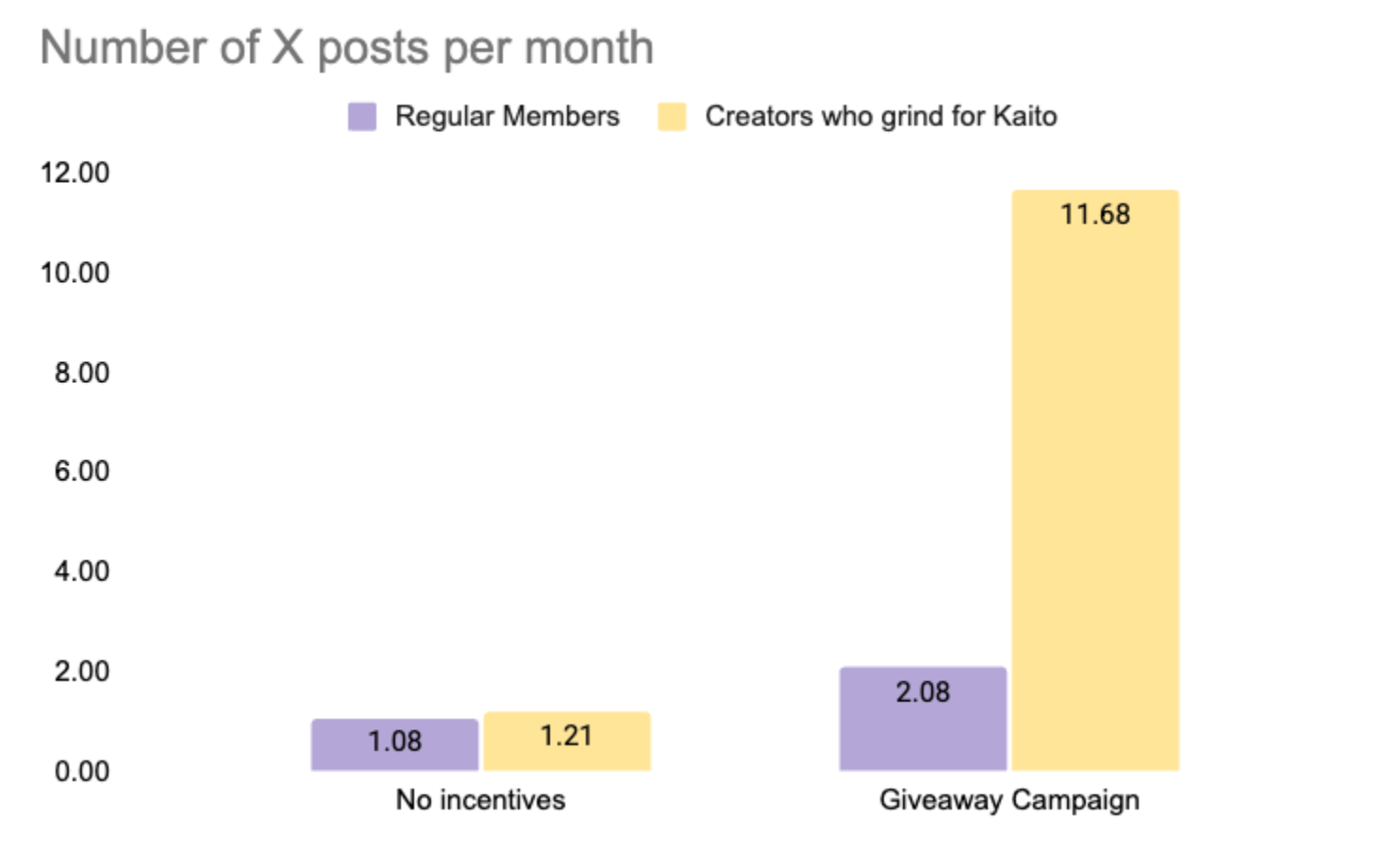
The Kaito rewards do not significantly change the behavior of real users in the crypto communities. They are either already using your product and talking about it, or they aren't.
Kaito: Excessively Monetized InfoFi Culture, Transactional Crypto Community
In almost all the projects that are running active campaigns on Kaito, we notice that 30% to 80% of the top 20 creators are mercenary creators. Although the algorithm correctly identified true superfans and put them into the top 1, top 2 positions on the leaderboard, it completely fails to incentivize those superfans into creating MORE organic social content.
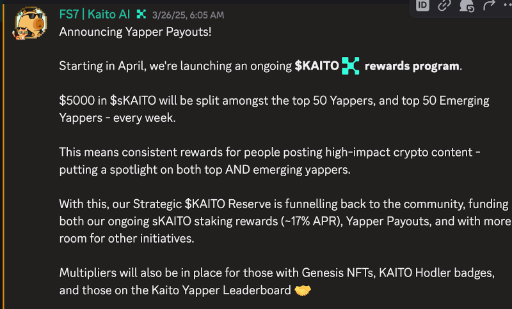
We believe that because Kaito focuses too much on amplifying projects through monetary incentives, it naturally attracts people looking to generate extra income. To such a detrimental effect that it crowds out your real organic users. Hence, if your crypto community is organic and strong, we believe that you absolutely should not use Kaito and teach your genuine members on how to make money out of you.
Most crypto projects have run campaigns that use monetary rewards. Case studies, such as the Re protocol, show that monetary rewards encourage the loudest users, not the most thoughtful ones. When rewards are removed, the bad actors (mercenaries) leave, and the active members rotate back to the good ones who were lurking. The community sentiment is clear: buying love with tokens rarely results in a sustainable culture.
Use Cases for Kaito Crypto
Crypto Creators & Grinders: How to make money on Kaito
For the everyday crypto enthusiast, or rather the "professional bounty hunter," Kaito Yap is a tool for reliable income. These users appear on the leaderboards for 8-9 projects at the same time. They utilize the platform to find campaigns that pay cash (USDC). They rarely care about the token itself unless the project has massive backing (like a16z) where the token represents a "winning lottery ticket" via whitelisting.
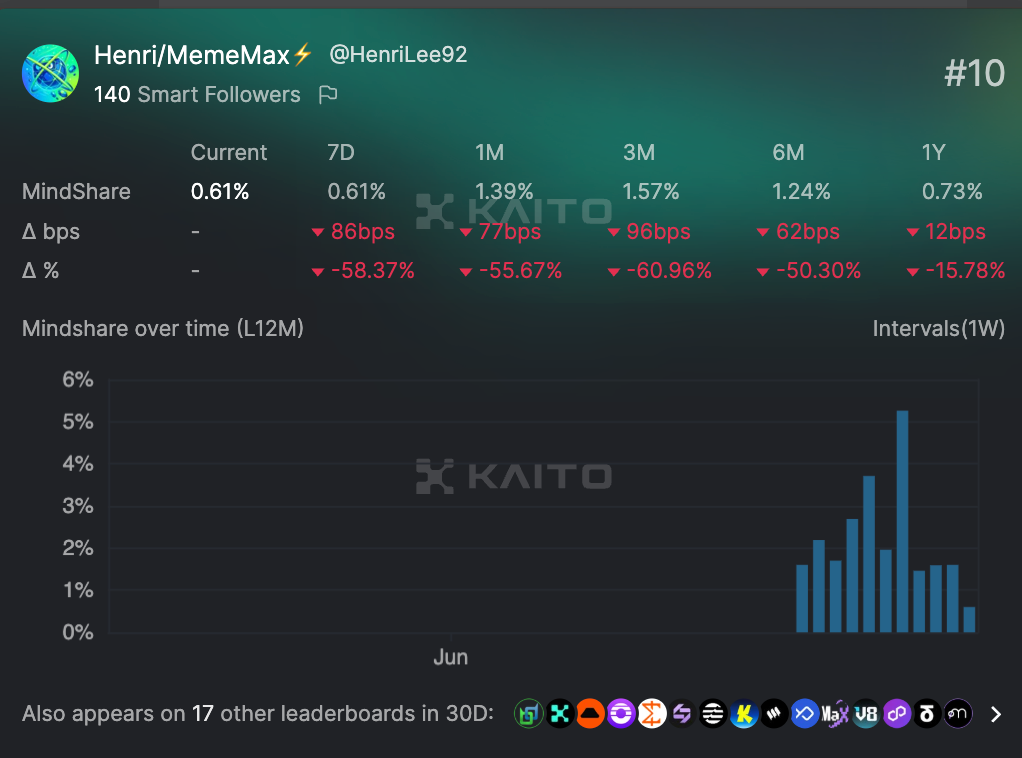
To be competitive on the leaderboard, creators usually have at least a couple of thousand followers to start (>5k) and around hundreds of smart followers. It seems that the key determining factor in your leaderboard ranking is the frequency of your posts. Most creators develop the habit of posting daily for 2-3 weeks on the projects that they are aiming for. Although Kaito has stated that they no longer use replies as a scoring factor, as creators, we notice that replies seem to matter.
How Should Crypto Projects Use Kaito Yaps
Kaito Yaps can't bring you geniue crypto users
For enterprises, Kaito Yaps is a marketing outsourcing tool. It replaces the need to pay an agency to source creators. However, tweets generated via Kaito usually stay within "Crypto Twitter" (CT). They rarely lead to website visits or significant upticks in product usage, according to SEMrush.
Below is an example of a project that ran aggressive USDC giveaways on CT during December while its website visits dropped.
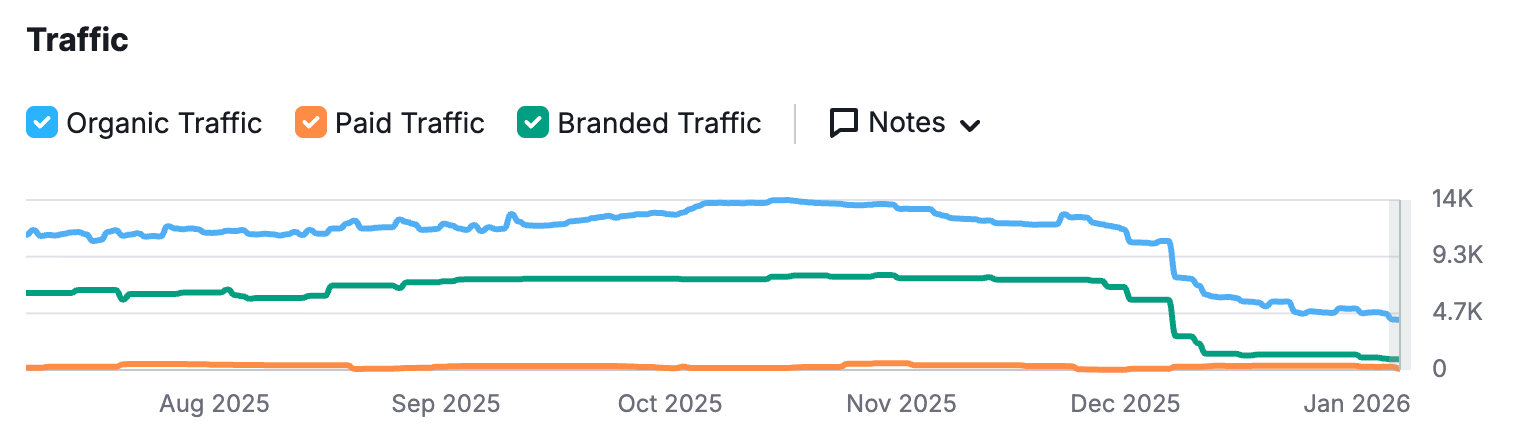
The most effective enterprise use case is simply "riding the wave." Projects use Kaito crypto for token distribution and awareness, similar to Galxe. If a project is willing to treat the platform as a bidding war—paying top dollar in cash to rank in the top 5 campaigns—they will get volume. But they should not expect this volume to translate into genuine, long-term users.
How Should Crypto Projects Use Kaito Yaps
1. Set the Right Expectations
View Kaito Yaps as an automated alternative to a traditional influencer agency. Instead of spending hours on manual outreach or thousands of dollars on management fees, Kaito allows you to run campaigns efficiently and hassle-free. However, treat it with the same seriousness as a professional campaign: it requires a real marketing budget.
2. Cash is King (Budgeting)
Just as in the traditional influencer market, liquidity dictates interest. While some creators accept tokens, the most competitive campaigns offer stablecoins (USDC/USDT).
- The Reality: The market is often inefficient at valuing potential upside for tokens. Therefore, immediate cash rewards significantly outperform promised token value in attracting creators.
3. Know Your Competition (The 4 Tiers of Attractiveness)
To budget correctly, benchmark yourself against the current Kaito Earn ecosystem. Projects generally fall into four categories of attractiveness:
- Tier 1: The Giants. High-liquidity tokens from famous projects (e.g., Polygon). Note: Even these giants often incentivize with cash.
- Tier 2: The Cash Cows. Projects paying out monthly USDC rewards to top creators.
- Tier 3: The VC Darlings. Projects rewarding in tokens, but backed by top-tier VCs with recent raises >$10M.
- Tier 4: The Long Tail. Smaller or newer projects offering only tokens.
4. The Strategy for Success
Most projects begin in Tier 4. To compete effectively, you cannot rely on token rewards alone. You must allocate enough liquid cash (USDC) to break into the "Top 20 Most Attractive Campaigns." If you cannot compete on brand fame yet, you must compete on immediate financial incentives.
5. Measuring KPIs
How do you define success? In a traditional arrangement, a professional brand ambassador might generate ~11 posts per month. Use this as your benchmark: if your Kaito campaign generates volume that meets or exceeds this standard per participant, you are winning.
6. The "Owned Media" Funnel
A paid post is not a relationship; it is a transaction. Your ultimate goal is to move these creators from the Kaito platform to your "owned" channels (Discord or Telegram). Use monetary rewards as the hook, but build genuine loyalty through community engagement or via a gamified Twitter game loop with organic community support,. Supplement the cash with "community love" so they stay for the mission, not just the money.
Final Thoughts on Kaito Crypto
To summarize, the biggest winner in the Kaito ecosystem is Kaito itself. The platform thrives on the waves of marketing budgets from projects trying to distribute tokens. It effectively outsources the noise of social media.
However, for a crypto project, the perspective is nuanced. Real users don't need your token to advocate for you. They need education, engagement, and assets. Writing tweets is hard; instead of paying for spam, projects should provide high-quality media—logos, mascots, posters—and educational material to empower their real fans.
If you are thinking about using the platform, here is our call to action: Don't bother with token incentives for real users. If you must use Kaito crypto, use it as a paid acquisition channel with cash rewards to generate noise, but do not mistake that noise for a community. True community building requires blood, sweat, and 24/7 engagement—something no algorithm can automate.