Friendzone: What Actually Makes a Discord Social Server Work?

There are thousands of social servers on Discord built around the simple premise of "making friends." Most fizzle out, drown in moderation nightmares, or turn into ghost towns where all real interaction immediately fragments into private DMs.
Friendzone is one of the rare exceptions.
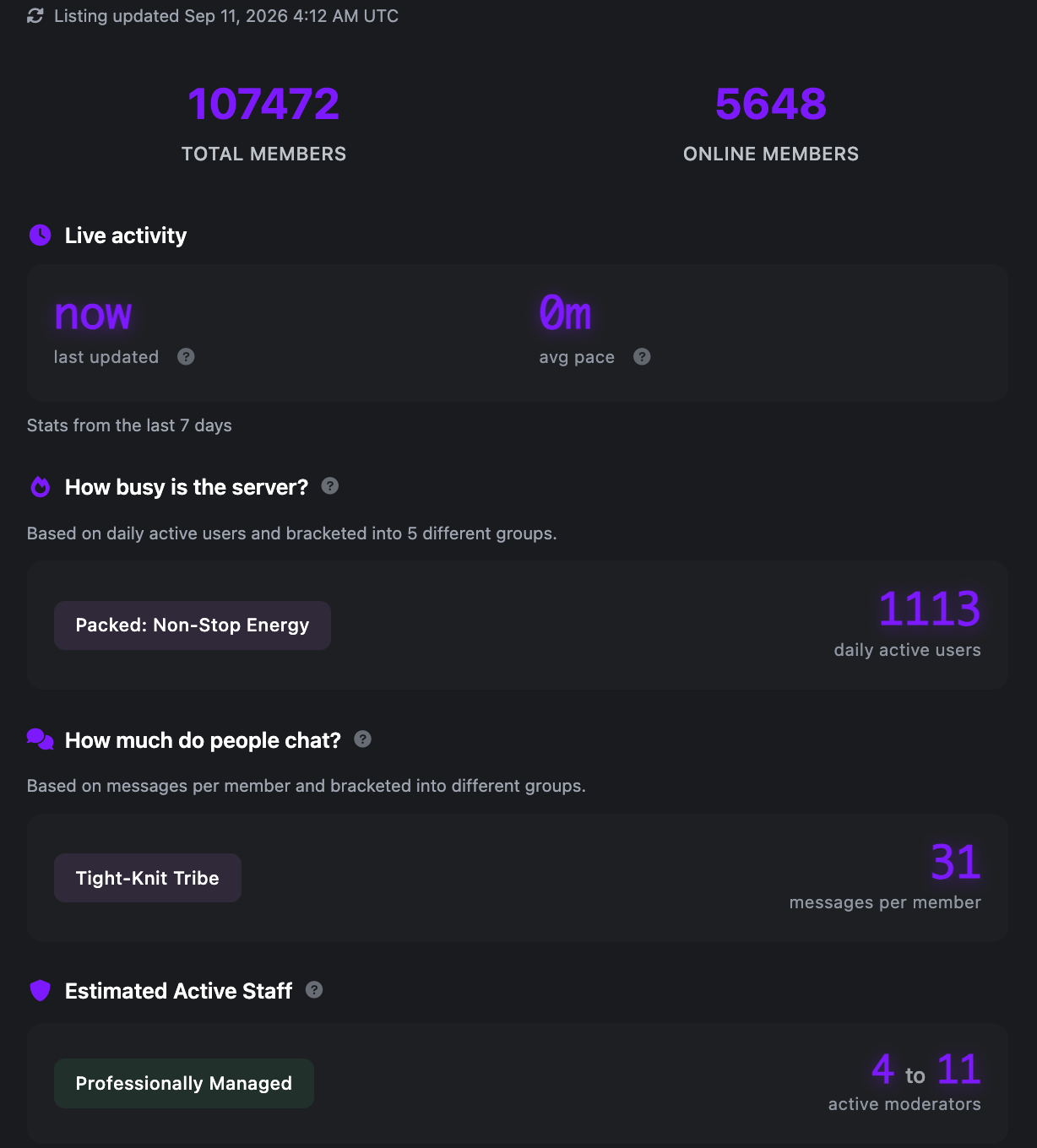
With over a thousand active users chatting daily, it balances public community interaction with private connection remarkably well. When we looked under the hood to see what makes it tick, we expected high-quality discussions and forums to be the primary retention driver.
What we found instead completely challenged how we think about Discord onboarding, retention, and community design.
1. Discord Is Not Reddit: The Job-to-be-Done
Friendzone has plenty of dedicated forum channels for debate and "hot takes"—things like "Is the US still a great place to live?" These threads are lively, opinionated, and initially what drew our attention.
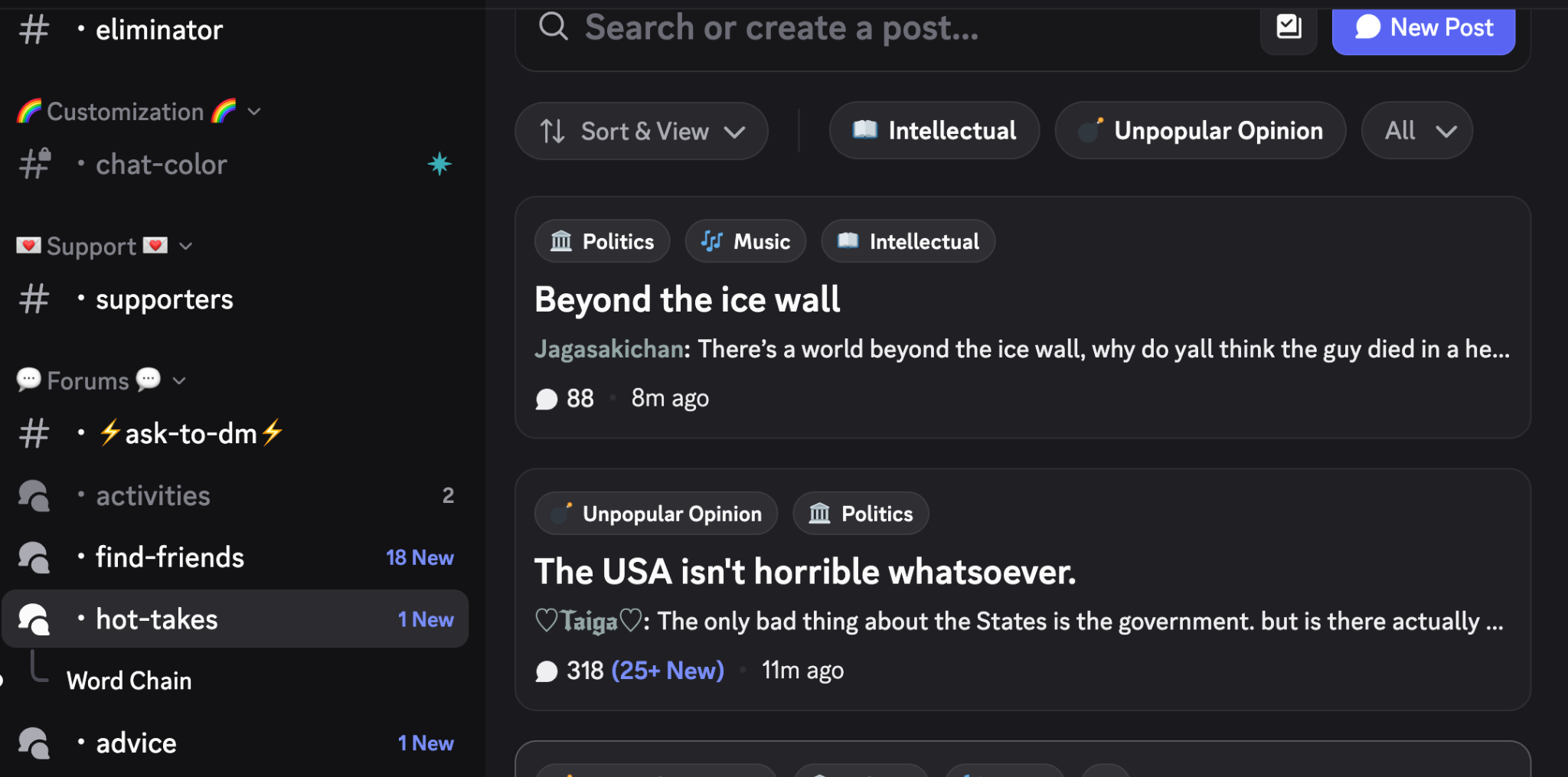
Naturally, you’d assume that engaging in these thoughtful debates keeps people coming back. The data showed the exact opposite: if a new user’s very first message was in a "hot take" channel, their long-term retention was close to zero.
Why? Because debate forums are trying to solve a problem Reddit already solved better. People don't join a Discord social server to read essays or broadcast hot takes into the void; they join to make friends.
When a user posts an intellectual hot take, they get a counter-argument. But when they post in general chat, they get a greeting. Discord’s actual Job-to-be-Done (JTBD) isn't content discovery—it is reciprocal, low-friction validation.
2. The New User Funnel: Three Paths, Three Very Different Retention Curves
When new members land in Friendzone, they are welcomed by a bot in a default channel called #town-center. From there, user behavior naturally splits into three distinct paths (counts for 85% of the traffic):
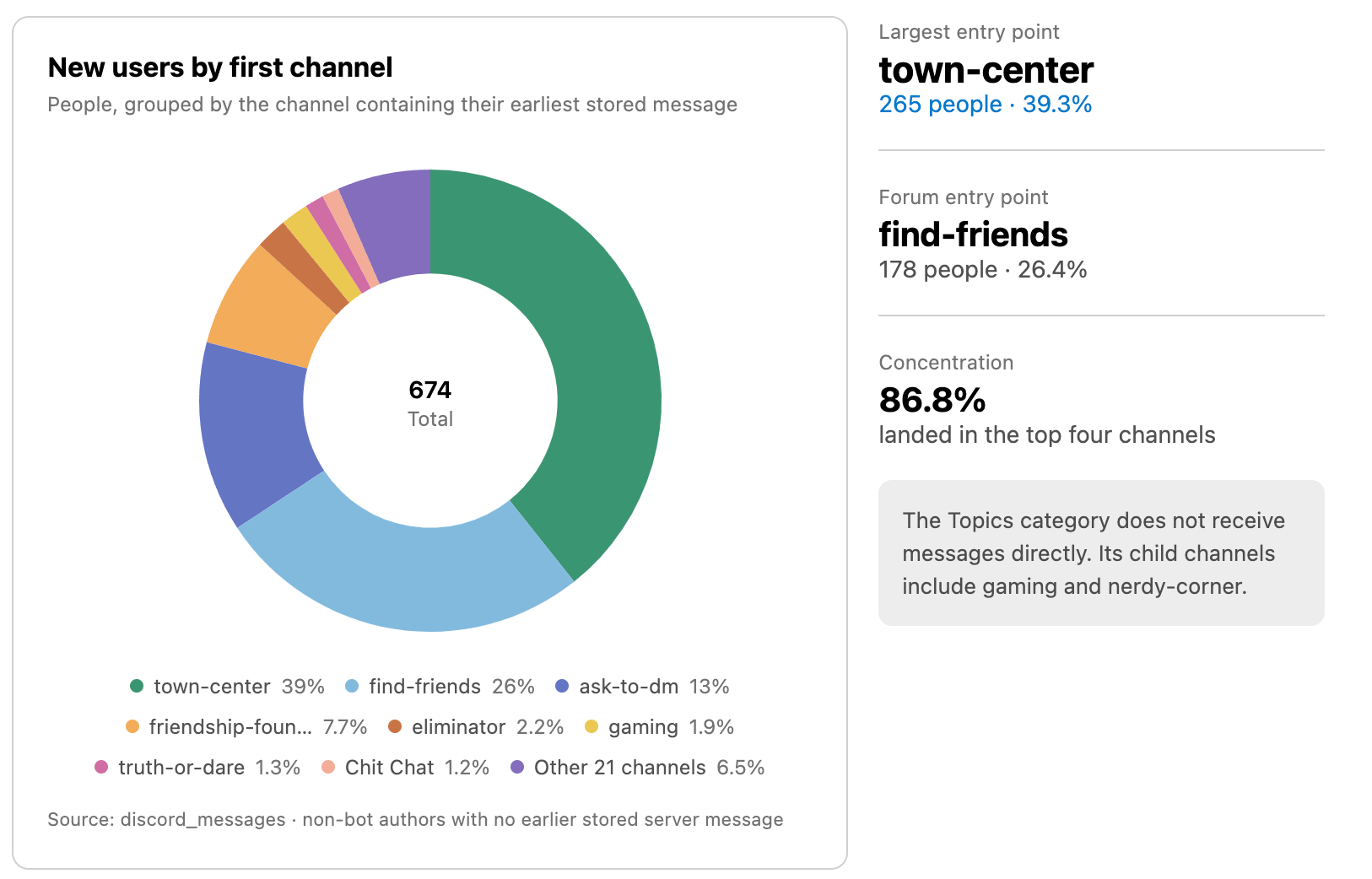
- Town Square (∼39%): Jumping straight into the general conversation stream.
- Find Friends (∼26%): Posting an introduction in an asynchronous forum thread.
- Ask to DM (∼13%): Sending a broadcast ping signaling they are open to receiving private messages.
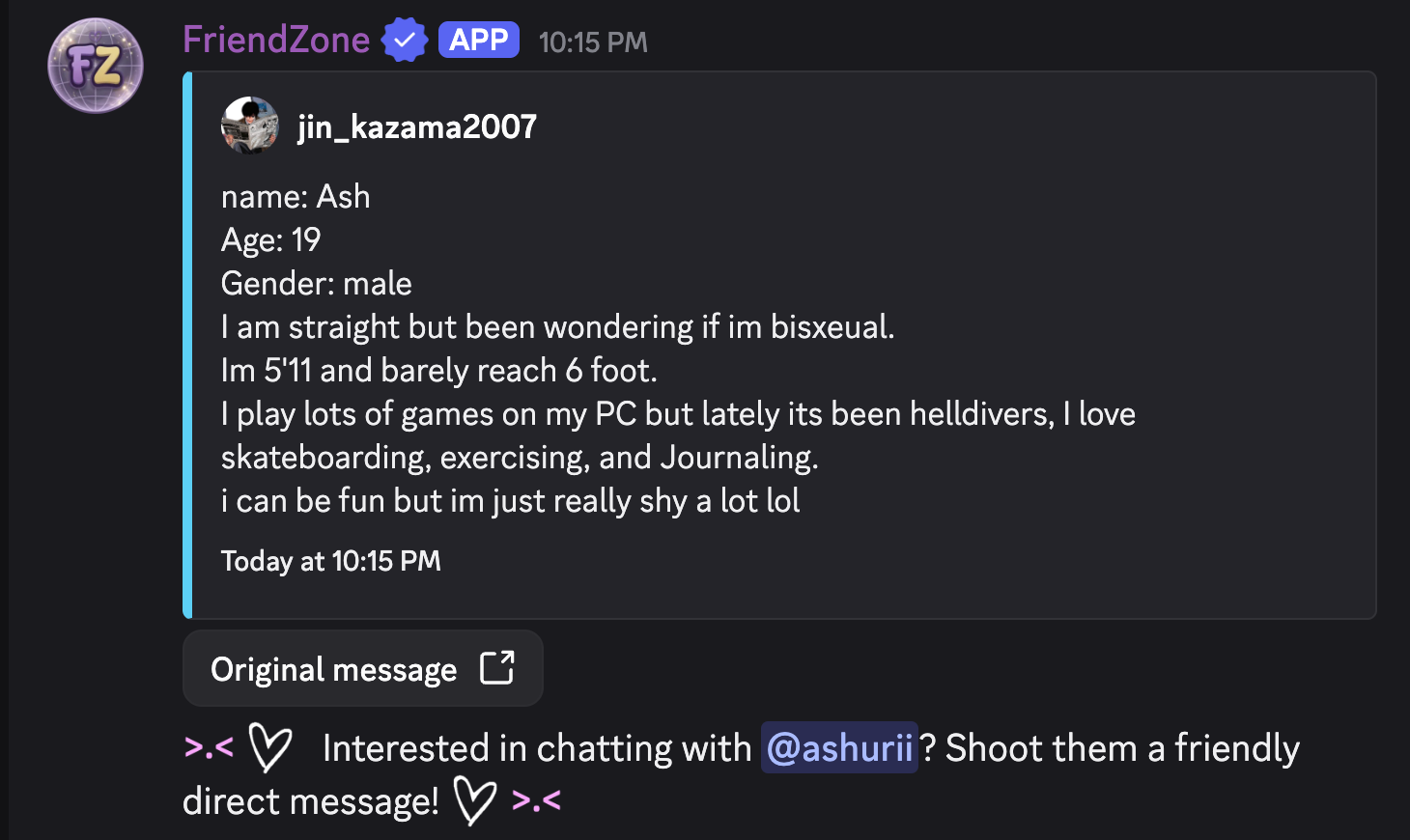
We tested "Ask to DM" ourselves and received a DM request almost instantly. It works—users get that immediate dopamine hit of private contact.
However, looking at the retention curves revealed a fascinating contrast:
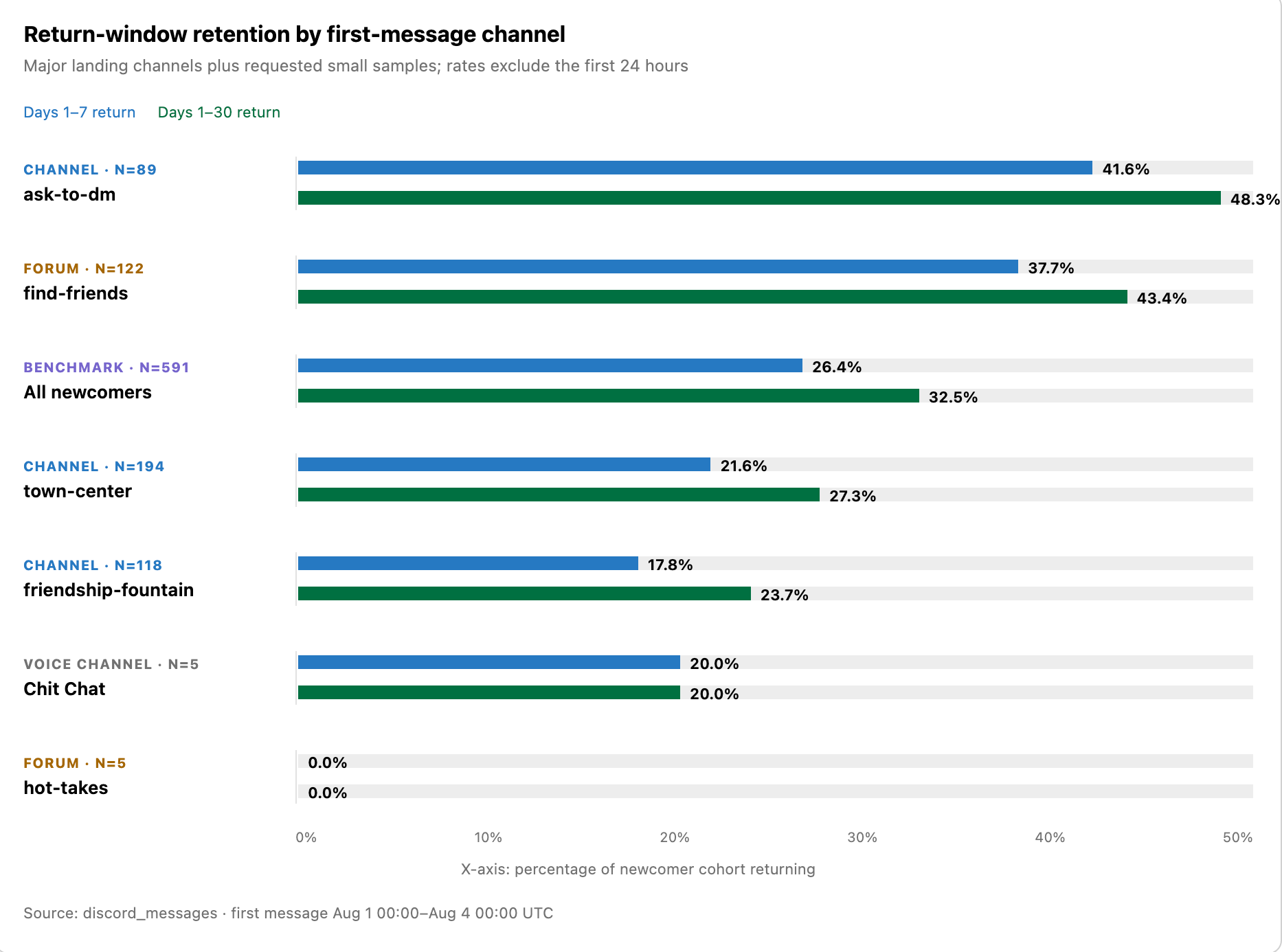
- The "Ask to DM" Trap: These users showed high retention for the first 7 days, followed by a steep drop-off. Once the novelty of a few transactional DMs faded, they had no root system tied to the wider community.
- The General Chat Advantage: Users whose first interactions happened in community-wide chat channels (like #Friendship-Fountain) had significantly higher long-term retention. It's also interesting that forums (#find-friends) have higher retention than channel chat.
- In a group setting, interactions are ambient and public: people tag each other, riff on inside jokes, and build familiar presence. DMs create isolated relationships; general channels create community.
3. The 6× Multiplier: Why Super Fans Stick Around
When we compared churned users against the server’s "super fans," one metric stood out above everything else: acknowledgment.
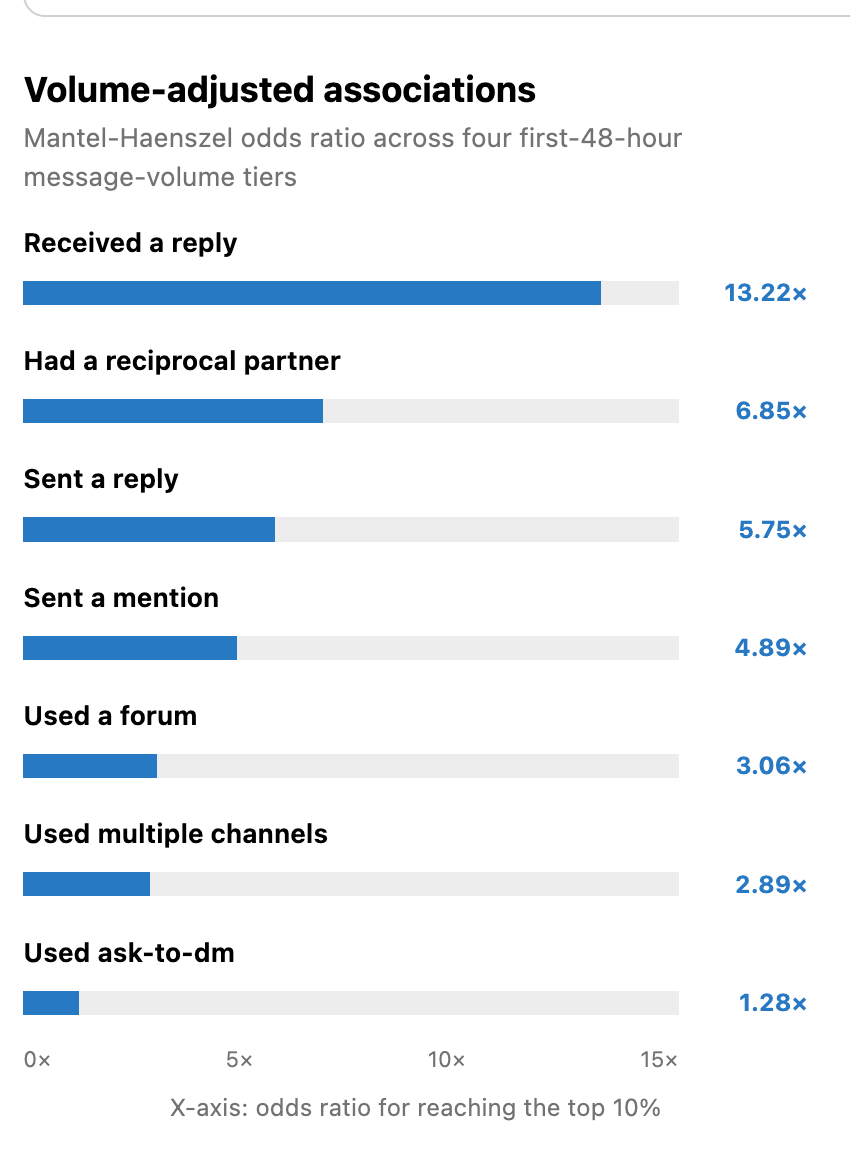
If another member responds directly to a new user, their likelihood of retention jumps by roughly 6×.
It sounds obvious, but it changes how you view content quality. On platforms like Instagram, X, or Reddit, content must be high-production, insightful, or entertaining to survive. Discord is the exact opposite: success is built on mundane, fleeting, low-stakes chat.
If you look at what regulars in Friendzone talk about, it’s rarely profound. They discuss what they ate for lunch, their workout routine, where they live, or how bored they are.
Traditional social media is for passive entertainment; Discord is for ambient co-presence. People aren’t looking for glorious content to bookmark—they are looking for someone to acknowledge their existence in real time.
New users initially come in with an explicit, transactional goal: "DM me, I want friends." But the users who stick around long-term transition into comfortable, low-maintenance chit-chat.
4. The "Four-Channel Rule": Why Topic Channels Still Matter
If general chit-chat drives retention and topic channels fail to retain new users, shouldn't a server just delete its niche channels (gaming, music, art, hot takes)?
No—because their value isn't onboarding; their value is relationship depth.
It's hard to build a deep bond solely within a fast-moving general chat. It's equally hard to sustain an active "Art" channel with strangers, because even the most prolific artist only has so much work to share.
The magic happens in cross-pollination:
- User A and User B bump into each other in #Town-Square.
- Later, they spot each other commenting in #Art or #Gaming.
- The shared context deepens the connection.
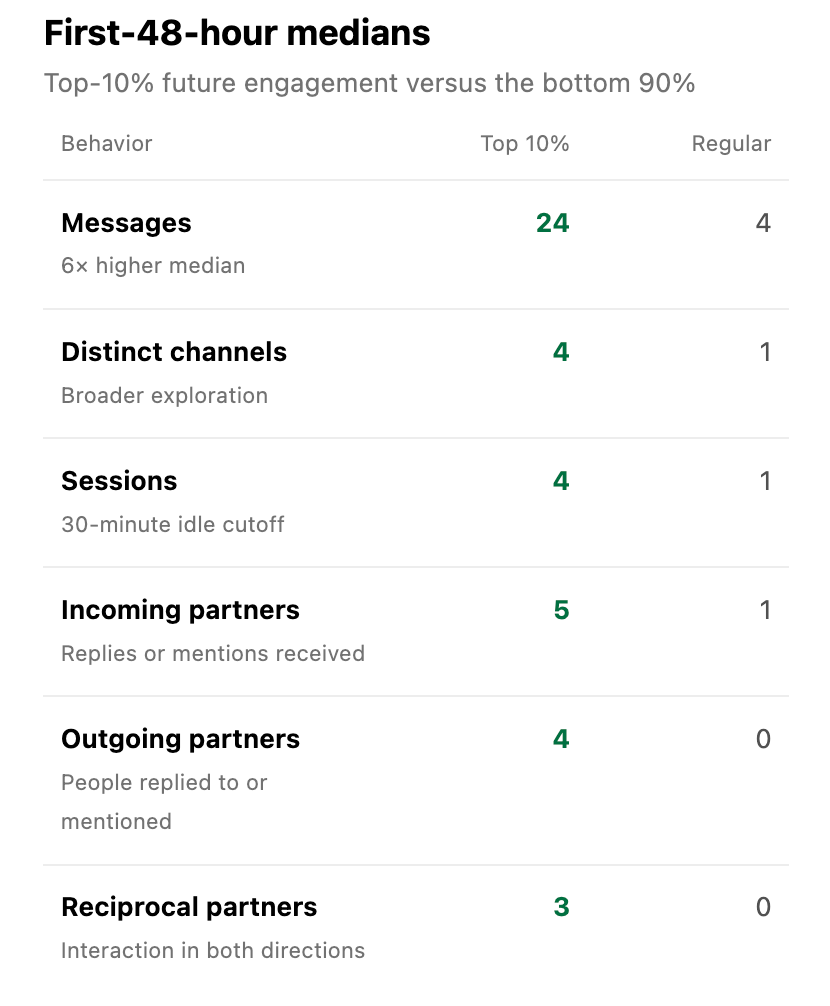
On average, it takes interactions across roughly 4 different channels for two members to form a meaningful, recognizable relationship within the community. In fact, another great indication of whether a user will come back is how many channels they have used. Superfan, on average, will visit four channels during their first day visit, versus a regular member who will visit only one channel.
Don't treat topic channels as isolated sub-communities. They exist to add touchpoints and surface shared interests for people who have already crossed paths in the main room.
Building a sticky Discord community isn't about hosting the smartest discussions or building the most complex channel architecture.
It comes down to two foundational mechanics:
- Speed to acknowledgment: How fast can a newcomer receive their first genuine reply?
- Ambient presence over content: Giving people a safe, low-pressure space where simply sharing their day is more than enough to belong.