The Best Discord Alternatives for Creators, Brands, and Online Communities


Discord dominates the conversation around online community platforms. It is the default recommendation for creators, gaming communities, developer groups, and a growing number of brand communities. But it is not the right platform for every use case, and for professional community managers and enterprise teams, its limitations are worth examining honestly.
This guide covers the best discord alternatives, compares the most commonly evaluated options, and helps you think through what platform actually fits your community's needs.

Choosing a platform is easier when you know how your community behaves.
CommunityOne Analytics helps you track Discord member trends, join activity, engagement patterns, and server health so you can make better community decisions.
Why Look Beyond Discord?

Discord's strengths are real. It is free to use at a meaningful feature level, has broad consumer familiarity, supports voice and video natively, and has a large ecosystem of bots and integrations. For many communities, it is the right choice.
But there are genuine reasons a community manager, creator, or enterprise team might want something different.
Privacy and data concerns. Discord's data practices have drawn scrutiny. For communities in regulated industries or with privacy-conscious members, a platform with stronger data controls or self-hosting options may be necessary.
Enterprise features. Discord's admin tooling is consumer-grade. For organizations that need SSO, audit logs, compliance controls, or integrations with enterprise software stacks, Discord's native offerings fall short.
Content and community focus. Discord is built around real-time chat. For communities where long-form discussion, searchable knowledge, or structured content is central, its channel-based architecture can feel like a limitation.
Monetization and access control. While Discord has introduced some monetization tools, platforms built specifically for creator monetization offer significantly more flexibility.
Reliability and performance. Discord experiences outages. For communities where uptime is critical, platform reliability is a legitimate consideration.
Discord Alternatives for Creators
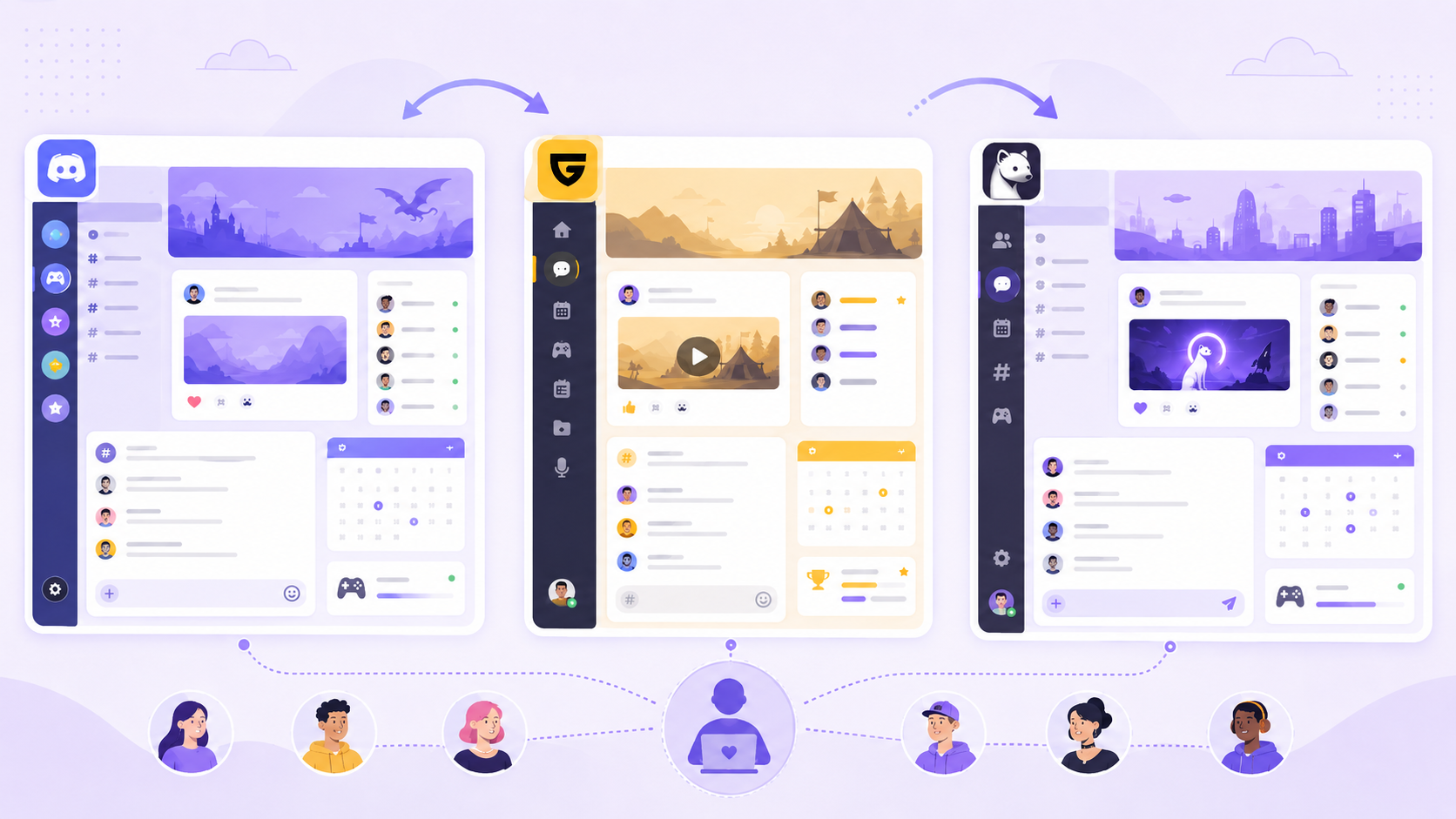
Guilded (Guilded vs Discord)
Guilded is the most direct feature-for-feature competitor to Discord. It was acquired by Roblox in 2021 but continues to operate independently. Guilded's key differentiators include unlimited server history without a Nitro equivalent, a built-in scheduling tool, and better tournament and game stat integration for gaming-focused communities.
For gaming communities and content creators with a gaming audience, Guilded is worth evaluating. Its interface will feel familiar to Discord users, making migration lower-friction than other alternatives. The tradeoff is a significantly smaller user base, which matters for discoverability and the ecosystem of third-party bots.
Stoat (Stoat vs Discord)
Stoat, formerly Revolt, is an open source chat platform built as a privacy-focused Discord alternative. It is still accessible through revolt.chat, but the product is now branded as Stoat. For communities that value open source software, privacy positioning, and a less corporate alternative to Discord, Stoat is still worth evaluating.
The limitation is maturity. Stoat’s feature set and ecosystem are still smaller than Discord’s, and its user base is much more limited. For technical, privacy-conscious, or open source-oriented communities, it can make sense. For mainstream creator or brand communities, the migration friction is likely high.
Voice Chat Alternatives to Discord
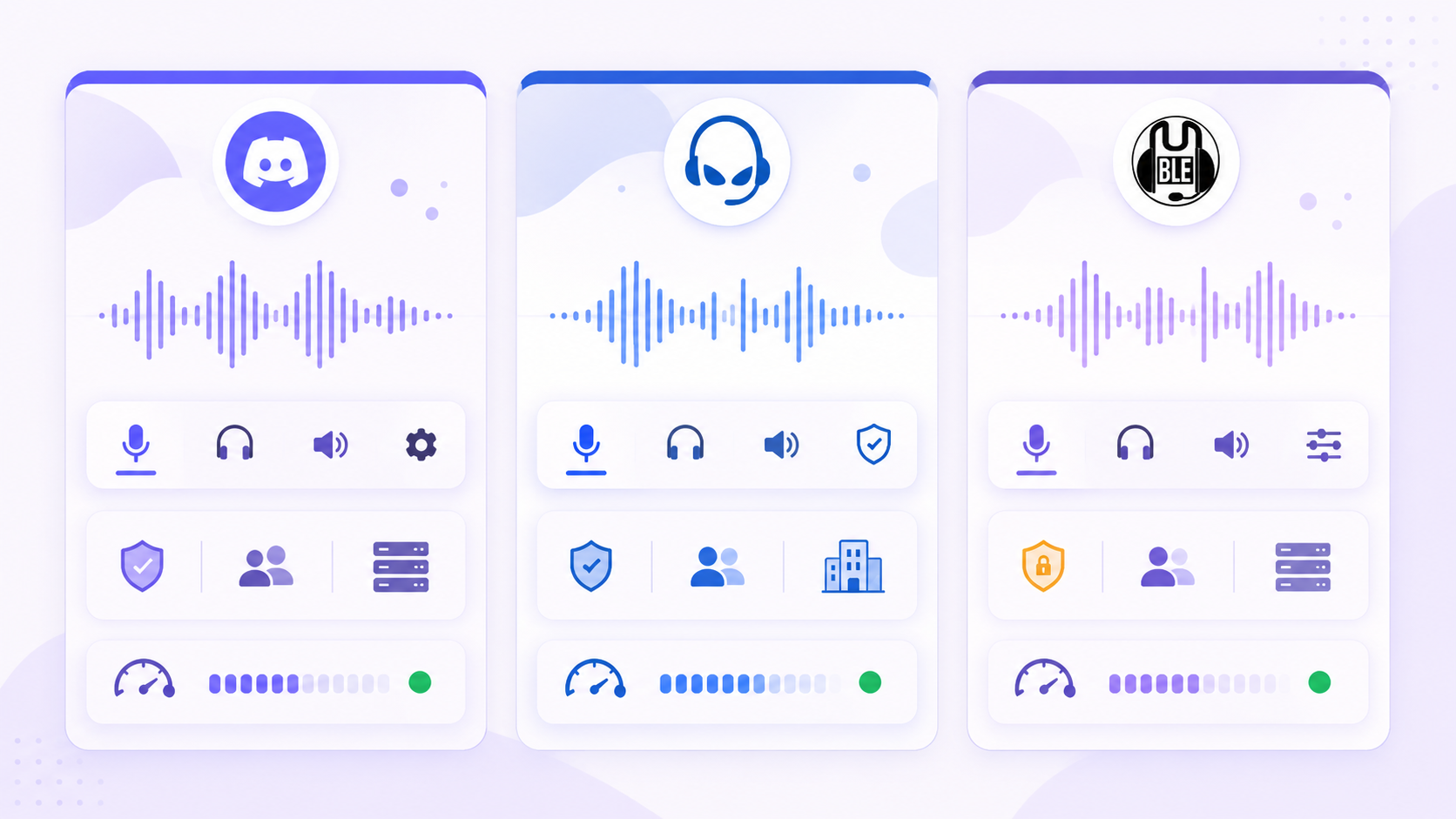
TeamSpeak (TeamSpeak vs Discord)
TeamSpeak has been around since 2001 and was the dominant voice platform for gaming communities before Discord arrived. It offers better audio quality at scale and more granular permission controls for voice channels. For large gaming communities where voice performance and control matter more than Discord's additional features, TeamSpeak remains a competitive option.
TeamSpeak's model is server-based, meaning communities host their own instance or rent server space. This gives administrators more control and avoids dependency on a third-party platform's uptime, but it also requires more technical setup and ongoing maintenance.
Mumble
Mumble is an open source, low-latency voice application. Like TeamSpeak, it requires server hosting and is best suited for technically proficient communities. Its audio quality and latency performance are strong, and being open source means there is no commercial dependency. It is a niche choice, but the right niche appreciates it.
Discord Alternatives for Online Communities and Customer Communities
Circle
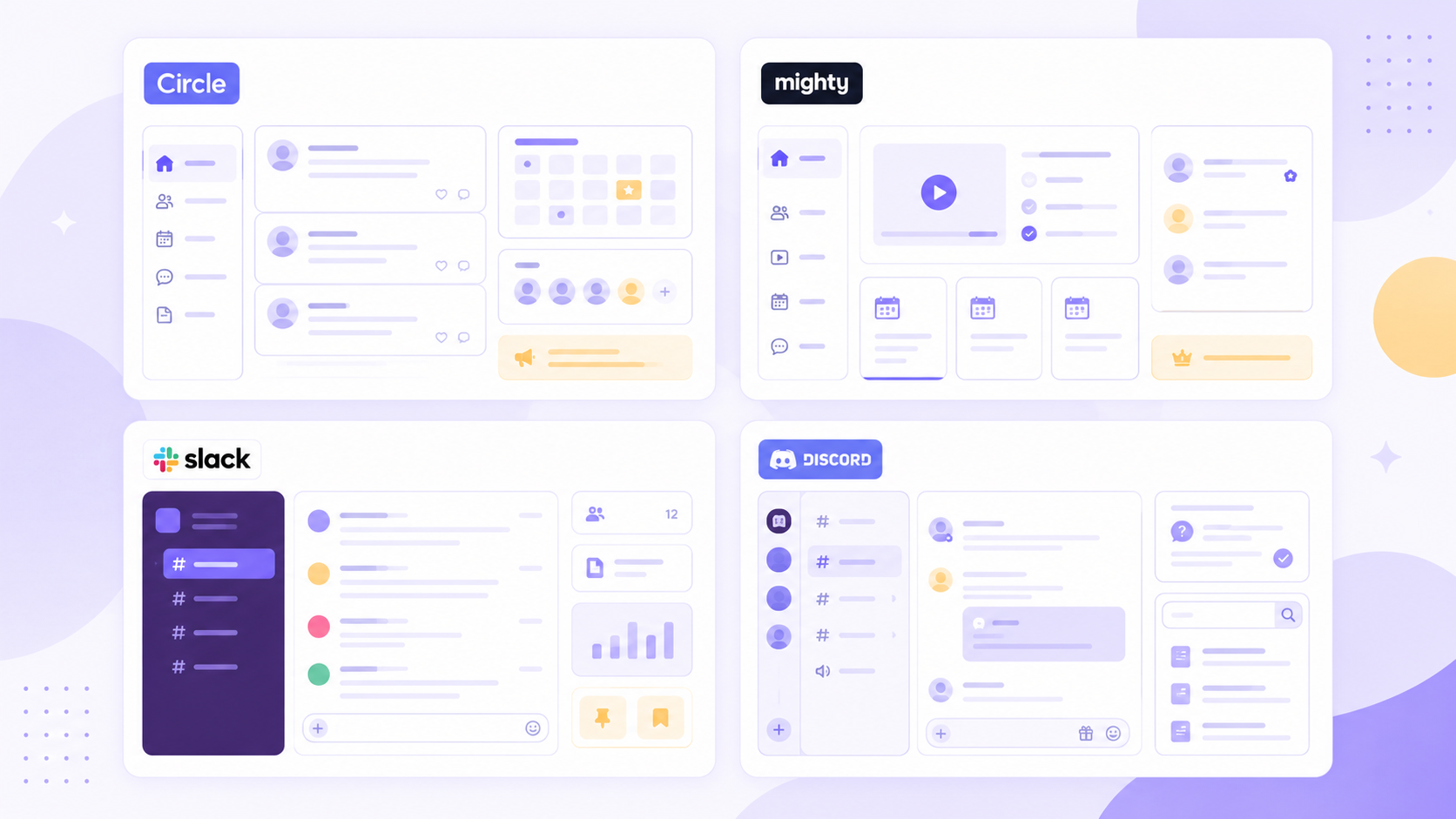
Circle is a community platform built specifically for creators, coaches, and brands running paid or gated communities. It supports discussion forums, courses, events, and member profiles in a more structured format than Discord's real-time chat model. For communities built around education, professional development, or premium membership access, Circle offers a significantly better content organization experience.
The tradeoff is that Circle has no voice or real-time chat in the Discord sense. It is a forum-and-events model, not a chat model.
Mighty Networks
Similar positioning to Circle but with a stronger emphasis on courses and monetization. Mighty Networks is designed for creators who want to run a paid community alongside their content business. Its community management tools are more developed than Circle's in some areas, particularly around member onboarding and cohort-based learning.
Slack
For professional and enterprise customer communities, Slack is a natural consideration. It has strong integrations with enterprise software, familiar UX for professional users, and better search and threading than Discord. Its primary weakness is cost at scale and the fact that members need a Slack account and workspace invite, creating more friction than a Discord join link.
Privacy-Focused Discord Alternatives
Matrix / Element
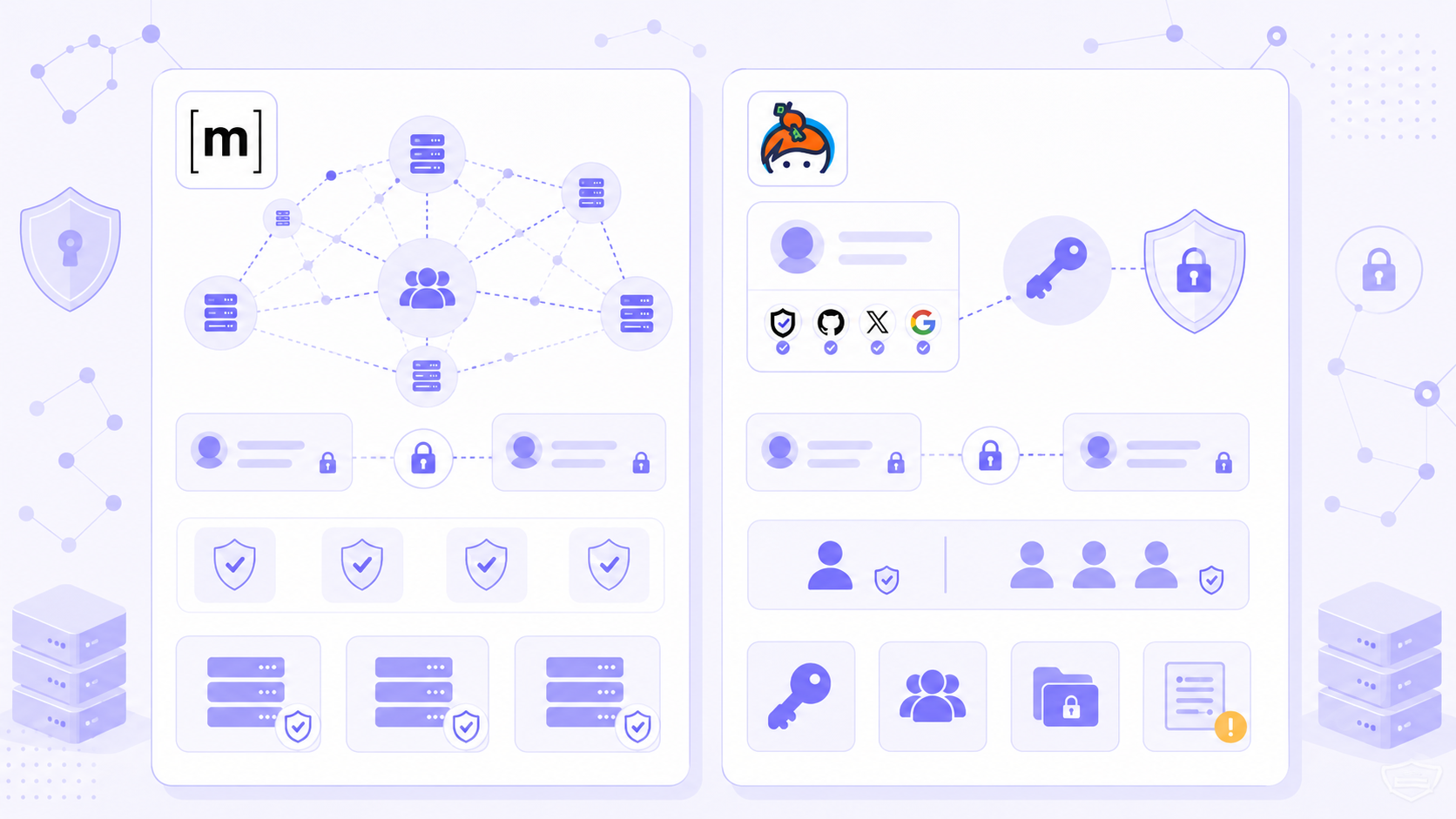
Matrix is a decentralized, open protocol for communication. Element is the most widely used client for Matrix. Communities on Matrix can federate across servers, self-host, and maintain full control over their data. For communities with strong privacy requirements or those serving audiences in regions with data sovereignty concerns, Matrix is the most technically serious alternative.
The barrier is usability. The Matrix ecosystem is significantly more technical and less polished than Discord, and the decentralized model, while principled, creates UX complexity that not all communities can absorb.
Keybase
Keybase offers end-to-end encrypted teams and communities. It is not a direct Discord replacement but fills a niche for security-sensitive communities where all communications being encrypted at rest and in transit is non-negotiable.
Discord Alternatives for Community Management at Enterprise Scale
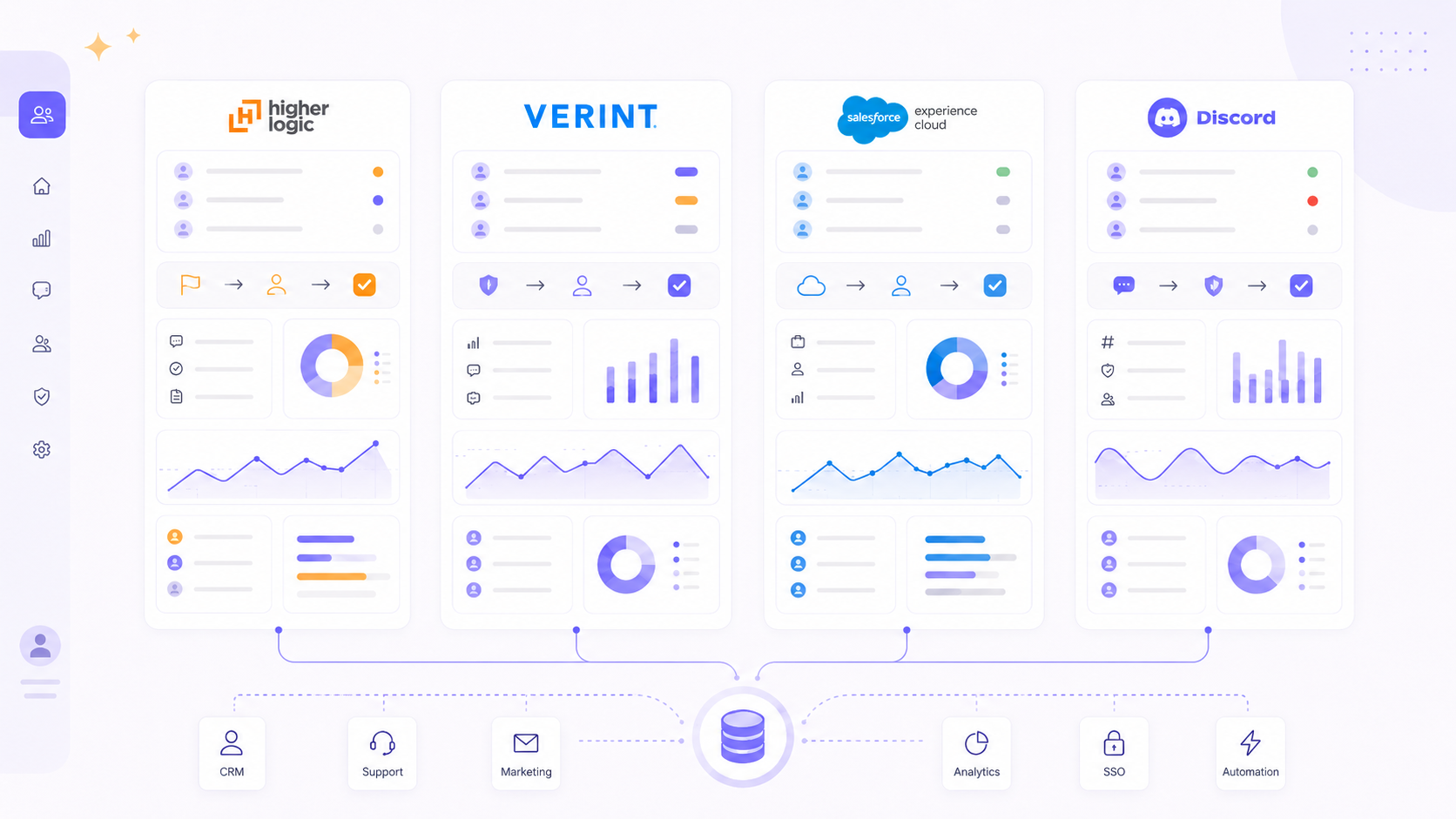
Higher Logic, Verint, and Salesforce Experience Cloud
For enterprise brands running customer communities, a separate category of platform exists: purpose-built enterprise community platforms. Higher Logic, Verint, and Salesforce Experience Cloud are built for structured customer engagement, support communities, knowledge sharing, CRM connections, and enterprise reporting in ways Discord is not designed to handle.
These platforms make more sense for companies that need customer lifecycle management, support integrations, moderation workflows, member segmentation, analytics, and stakeholder reporting. The tradeoff is cost and implementation complexity. They are not casual Discord replacements. They are enterprise community infrastructure.
How to Choose: A Framework

Rather than leading with platform names, start with your requirements.
What is the primary mode of interaction you are designing for? Real-time chat, voice, async forum discussion, or structured courses each point to different platforms.
Who is your audience and what platforms are they already on? Migration is a real cost. A community built on Discord will not move to Revolt without significant friction. If Discord is already where your audience lives, the bar for switching needs to be high.
What are your privacy, compliance, or data requirements? Enterprise and regulated-industry communities often have non-negotiable requirements here that eliminate most consumer platforms from consideration.
What is your budget? The free tier of Discord is genuinely capable. Most alternatives at feature parity cost money. Make sure you are comparing the full cost, including hosting for self-hosted options.
How important is ecosystem depth? Discord's bot ecosystem, third-party integrations, and community tooling are unmatched. Moving to a less established platform means a thinner tooling ecosystem, at least for now.
The Honest Takeaway
Discord is the right platform for most creator and hobbyist communities. Its scale, free access, and feature depth are hard to match. For communities with specific needs around privacy, enterprise integration, structured content, or professional audience expectations, the alternatives above are worth evaluating seriously.
The most important thing is to make the choice based on your community's actual needs rather than default assumptions. The platform is infrastructure. What you build on it is what matters.
A well-run Discord server is easier to discover.
List your community on CommunityOne and reach members looking for active, trusted, and well-managed Discord servers.