Mod Burnout Is Real: How to Structure a Team So It Doesn't Happen

Mod burnout doesn't usually show up as one dramatic resignation. It shows up as a moderator who used to respond in minutes now taking hours, who used to enforce rules consistently now letting things slide because they don't have the energy for another argument, who used to enjoy the server and now just tolerates it. By the time it's obvious, the person is already most of the way out the door.
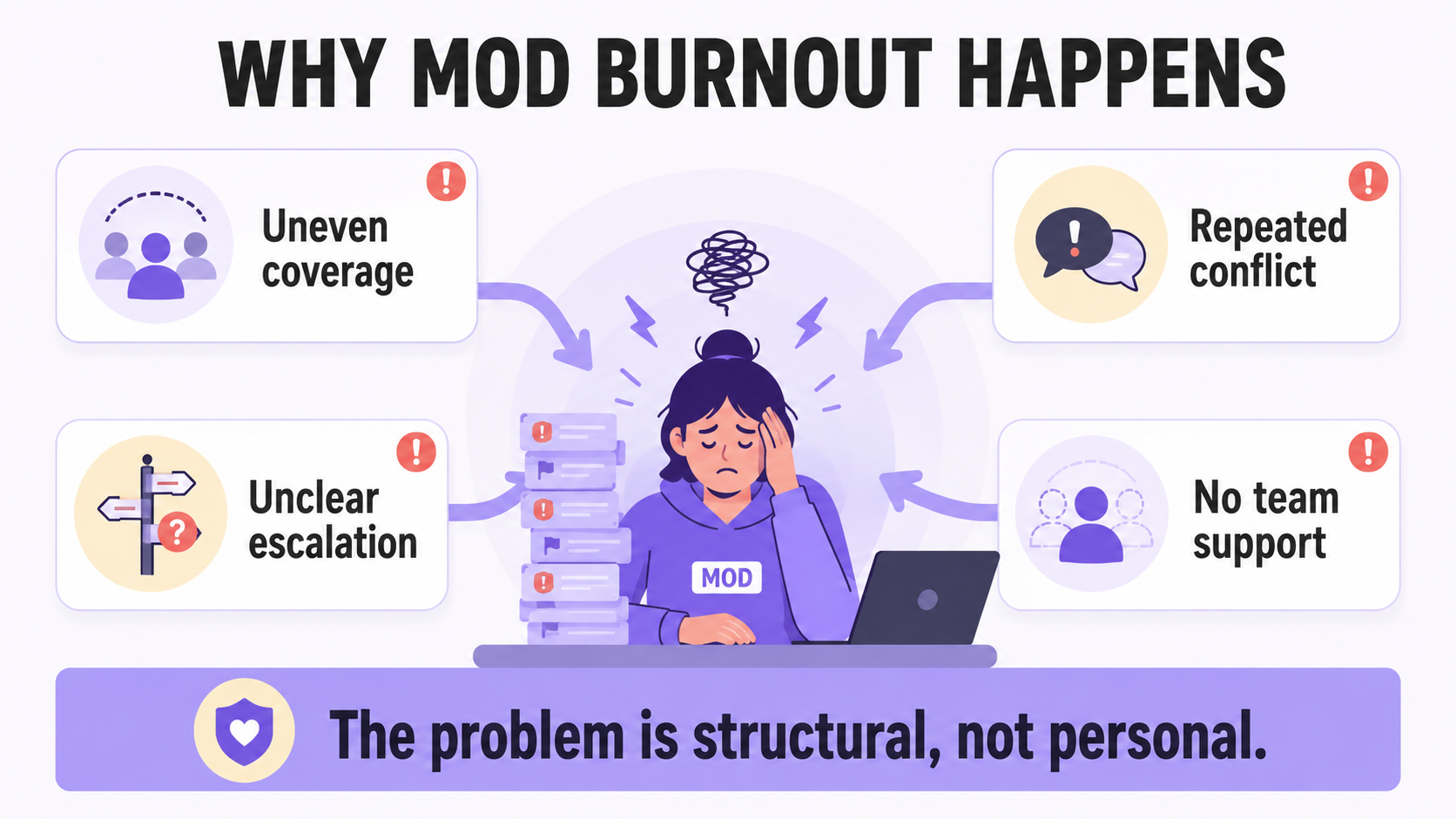
The uncomfortable truth is that most mod burnout is a structural problem, not a personal one. It happens when moderation work isn't distributed, when there's no process for handling conflict between members, and when the same two or three people end up carrying a workload that should be spread across a team. This guide covers what actually causes burnout, how to structure a mod team so the load doesn't concentrate on a few people, and how to handle conflict without it draining everyone involved.

Take the repetitive stuff off your mod team's plate. CommunityOne's AI moderation bot handles raids, spam, and rule enforcement automatically, so your team spends less time on the grind and more on the community.
What Actually Causes Mod Burnout
It's rarely the volume of reports alone. Moderators who feel supported can handle a genuinely busy queue without burning out. What actually wears people down is a combination of things: being the only person available at certain hours, handling the same low-level conflicts over and over with no resolution, getting blamed by members for enforcing rules they didn't write, and not having anyone to talk to about a hard call after it's made. Isolation is usually the bigger factor than workload. Tools like Spark can take some of the repetitive load off by answering the same questions members ask over and over, but they don't fix the isolation part.
Structuring a Team So the Load Doesn't Concentrate
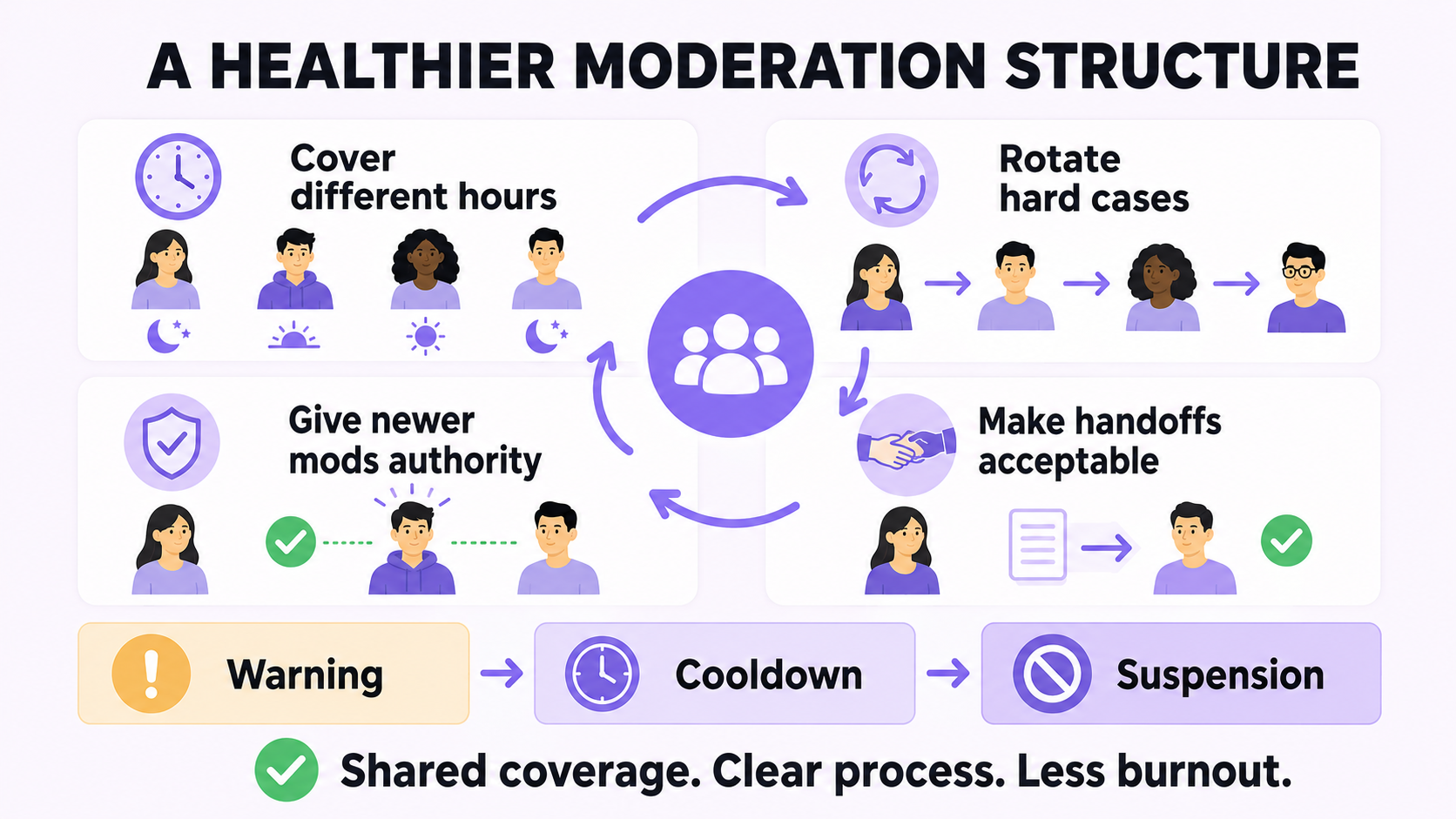
The single biggest fix is coverage across time zones and schedules, not just headcount. A team of eight mods who are all in the same time zone and all active in the evenings still leaves mornings uncovered by anyone. When you're recruiting or promoting mods, actively look for gaps in when people are around, not just how many people you have on paper.
Beyond scheduling, a few structural habits keep the load spread out:
- Rotate who handles the hardest cases, like ban appeals or disputes involving another mod, instead of routing them to the same senior person every time
- Set an explicit expectation that no one is on call around the clock, and make it acceptable to leave something for the next active mod
- Give newer mods real authority over minor cases instead of routing everything through one or two senior people who become bottlenecks
Track who's handling how much, even informally, so you notice when one person's queue is consistently heavier than everyone else's
Handling Conflict Without It Draining Everyone
A lot of what burns mods out isn't rule-breaking, it's disputes between members that have no clean resolution: two people who dislike each other dragging the same argument into every channel, a disagreement in the community that keeps resurfacing, a member who's technically not breaking rules but is exhausting to deal with. Treating every one of these as a fresh case to fully resolve is what wears a team down, since some of them simply don't have a clean resolution.
Having a documented, agreed-upon process helps more than it might seem. A simple escalation path, like a first warning, a cooldown or timeout, then a longer suspension, means a mod doesn't have to improvise a judgment call from scratch every time and defend that judgment call to the rest of the team afterward. It also means members experience consistent consequences regardless of which mod is on at the time, which reduces the amount of "why did they get away with it last time" friction that mods end up absorbing personally.
It also helps to give mods explicit permission to disengage from a repetitive dispute rather than mediate it to resolution every single time. Muting a channel for an hour or handing a case to whoever's next in rotation is a legitimate response, not a failure.
Recognizing Burnout Before It Becomes a Resignation
The early signs are usually visible before the person themselves would call it burnout. Response times creeping up, a mod who used to be active in general chat going quiet outside of moderation duties, someone becoming noticeably more irritable or rigid in how they enforce rules, or a mod who stops flagging edge cases to the team and just starts making unilateral calls to get through the queue faster. Checking in directly, and meaning it rather than treating it as a formality, catches most of this before it turns into someone quietly stepping back.
Final Thoughts
Mod burnout isn't a sign that someone wasn't cut out for the role. It's usually a sign that the structure around them asked too much of one person for too long. Spread the coverage, build a process for the disputes that don't have clean answers, and check in with your team before the warning signs turn into an empty seat on the mod roster.