How to Monetize Your Discord Server in 2026

Discord started as a gaming chat app. Now it's the infrastructure behind thousands of paid communities, creator businesses, and subscription products. Server owners have more monetization tools built directly into the platform than ever, and a growing number of them are generating real income without sending members anywhere else.
This guide walks through every legitimate monetization path available to Discord server owners in 2026: what each one pays, what it requires, and which ones actually work depending on where your server is in its growth. If you're still under a few hundred members, our guide on growing a Discord server is the better starting point before you circle back here.
What You Need Before You Monetize
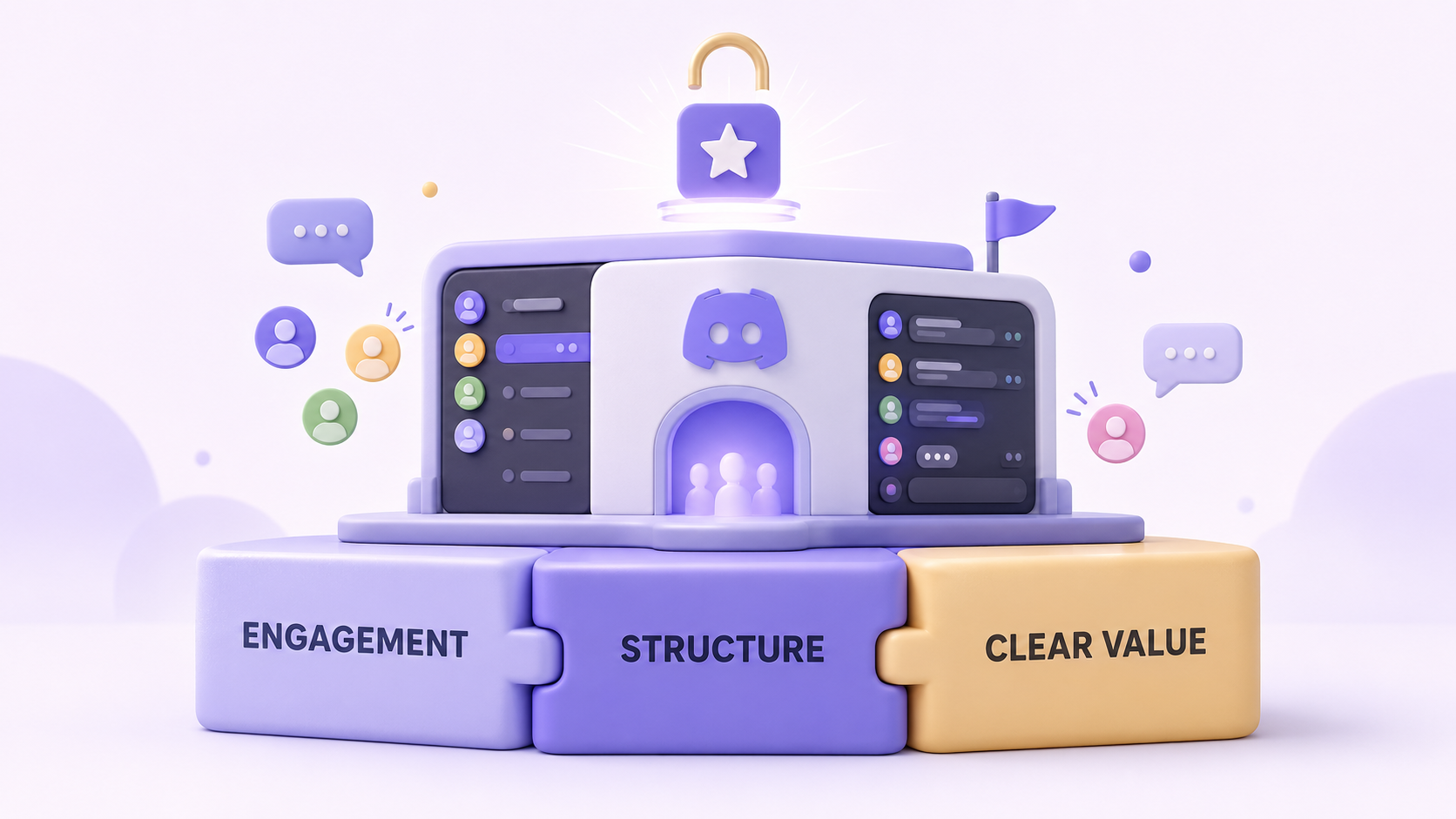
Monetization fails when it's introduced too early. Before any of the methods below work, you need an engaged community, not just a member count. A server with 500 active, loyal members will out-earn a server with 5,000 idle ones every time.
The other prerequisite is basic structure: consistent moderation, channels that don't feel neglected, and enough of a team that things keep running while you focus on the parts that generate revenue. If you're still handling every ping yourself, read our guide on building a mod team before you start taking on paying members.
You also need a clear answer to one question: what does a paying member get that a free member doesn't? Vague asks like "support the server" rarely convert. Specific, tangible value does.

Your revenue tells you who's paying. CommunityOne tells you who's sticking around.
Track retention, activity, and engagement by segment so you know which paid tiers are actually worth the effort, not just the signup.
Method 1: Discord Server Subscriptions
Discord's native Server Subscriptions (formerly "Server Premium") let members pay a monthly fee directly through Discord for exclusive channels, roles, and perks you define. Discord handles billing and payment processing. You set the price and the perks.
Enable it from Server Settings > Monetization. You'll need 100+ members, a server at least 90 days old, and good standing. Set up one or more tiers at different price points, create subscriber-only channels, and assign the roles that unlock them. Discord takes a 10% cut of subscription revenue. You keep the other 90%, paid out monthly once you hit the minimum payout threshold.
What converts: subscriber-only channels with genuinely exclusive content (early access, behind-the-scenes, private Q&As), direct access to you as a perk for top-tier subscribers, and subscriber-only voice sessions. "Subscribers get access to my private coaching channel and weekly group calls" beats "Support me and get a special role" every time.
What doesn't: gating content people already expect for free. If your server's main value is the community itself, members won't pay to be separated from it. Subscriptions work when the paid tier adds something new, not when it restricts something that already existed.
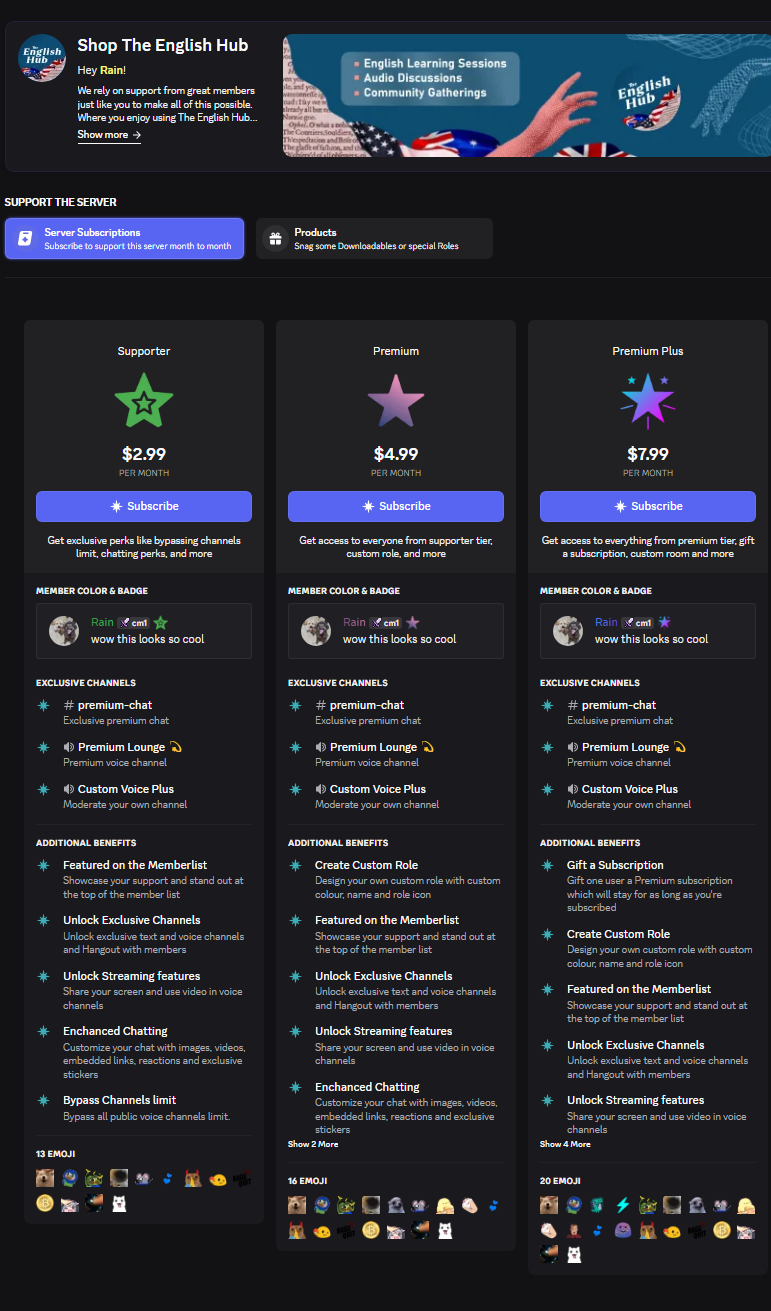
The English Hub, a language-learning community, runs three Server Subscription tiers: Supporter at $2.99/month, Premium at $4.99/month, and Premium Plus at $7.99/month. Each tier stacks on the last, adding a custom member color and badge, access to exclusive channels and voice lounges, streaming and enhanced chat permissions, and a custom role, with Premium Plus adding the ability to gift a subscription to another member. It's a clean illustration of tiered pricing done right: higher tiers get more, but nothing in the free experience gets worse.
Method 2: Patreon Integration
Patreon's Discord integration automatically assigns roles based on a member's Patreon tier. Connect a Patreon account to Discord, and as long as the subscription stays active, the member keeps the role and the channel access it unlocks. Cancel on Patreon, lose the role on Discord.
Set up your Patreon page with tiers, connect it to your server through the Patreon Discord integration in Patreon's creator dashboard, and map each tier to a role. Patreon charges 8 to 12% of revenue depending on your plan; you keep the rest, paid monthly.
This works best for creators who already have, or are building, an audience elsewhere. If you run a YouTube channel, a TikTok account, or a newsletter, Patreon gives that audience a payment system they already trust, with Discord as the hub for paying supporters. Our guide on growing a YouTube channel covers that funnel in more depth if that's the audience you're building.
It doesn't work as a primary acquisition channel if you have no audience outside Discord. Patreon has almost no built-in discovery. Nobody finds your Patreon page unless you already have a presence somewhere else.
Second Wind, the media group behind creators like Yahtzee Croshaw's Fully Ramblomatic, runs its Patreon on a small ladder of tiers from $1 up to $10 a month. The $5-and-up tiers strip ads from the videos and open the door to their Premium Discord channels, where paying members chat directly with the crew and weigh in on upcoming content, on top of a public Discord server that's grown past 21,000 members. Nobody has to pay to be part of the community; the Patreon tiers just add a closer line to the people making the content.
Method 3: Paid Roles via Bots (Stripe Integration)
Bots like Memberful and Whop let you sell Discord role access directly, with Stripe handling payment. Members pay on an external checkout page and get automatically added to your server with the right role, and automatically removed when the subscription lapses.
Set up an account, connect your server, create products (one-time or recurring), and share the checkout link. Memberful charges 0% on its Growth plan ($49/month) plus Stripe fees (roughly 2.9% + $0.30 per transaction). Whop charges a percentage of revenue, typically 3 to 5%, plus Stripe fees. Both are cheaper than Patreon at scale.
This works well for a focused, high-value community: trading signals, niche expertise, accountability groups, private masterminds. The checkout flow is cleaner than Patreon for non-creator products, and the economics improve with volume.
It requires you to drive your own traffic to the checkout page. Unlike Patreon or Discord Subscriptions, there's no built-in discovery here. You need an external channel (newsletter, social, SEO) for this to work at all.
Method 4: Sponsored Announcements
Brands pay server owners to post promotional messages in #announcements or a dedicated #sponsors channel. It's the Discord equivalent of a newsletter sponsorship.
Sponsors typically pay a flat rate per placement rather than CPM or CPC. Rates vary enormously by server size, niche, and engagement: a 10,000-member gaming server with high daily activity might charge $200 to $500 per announcement, while a niche expert community of 2,000 highly engaged members in a valuable vertical can often charge more.
Inbound sponsorships tend to show up once your server is active and visible. Outbound outreach works faster: find brands already sponsoring Discord servers or creators in your niche, reach out with your server's stats (member count, daily active members, engagement rate), and propose a flat-rate test placement.
This works best in niche servers where the audience has real purchase intent. A crypto trading server, a fitness accountability server, or a developer community can command premium rates because the audience is specific and valuable. Generic gaming servers with broad demographics command lower rates.
Don't take sponsors whose products don't fit your audience. One bad placement erodes trust that took months to build. Every sponsor should pass a simple test: would you genuinely recommend this to your members if you weren't being paid?
Method 5: Paid Courses and Digital Products Delivered via Discord
Some server owners use Discord as the delivery mechanism for paid cohort courses, workshops, and digital products. Members pay for a course, get added to a private server (or a private category of channels), and the content is delivered through text channels, voice calls, and pinned resources.
Sell access through Gumroad, Lemon Squeezy, or your own Stripe setup. On purchase, members get an invite link, manually or through a bot integration. Course content lives in structured channels: a course-overview channel, weekly module channels, a Q&A channel, and live sessions in voice.
This works well for cohort-based learning where peer interaction is part of the value. The community piece, members learning together, asking questions, sharing progress, is something static course platforms like Teachable can't replicate. Accountability-driven niches (fitness, language learning, business skills) convert especially well.
It doesn't work as a replacement for a proper course platform if your content is mostly video. Discord has no native video hosting, so you'll need to link out to YouTube (unlisted), Loom, or another host, which adds friction to the student experience.
Stacking Methods: What Works Together
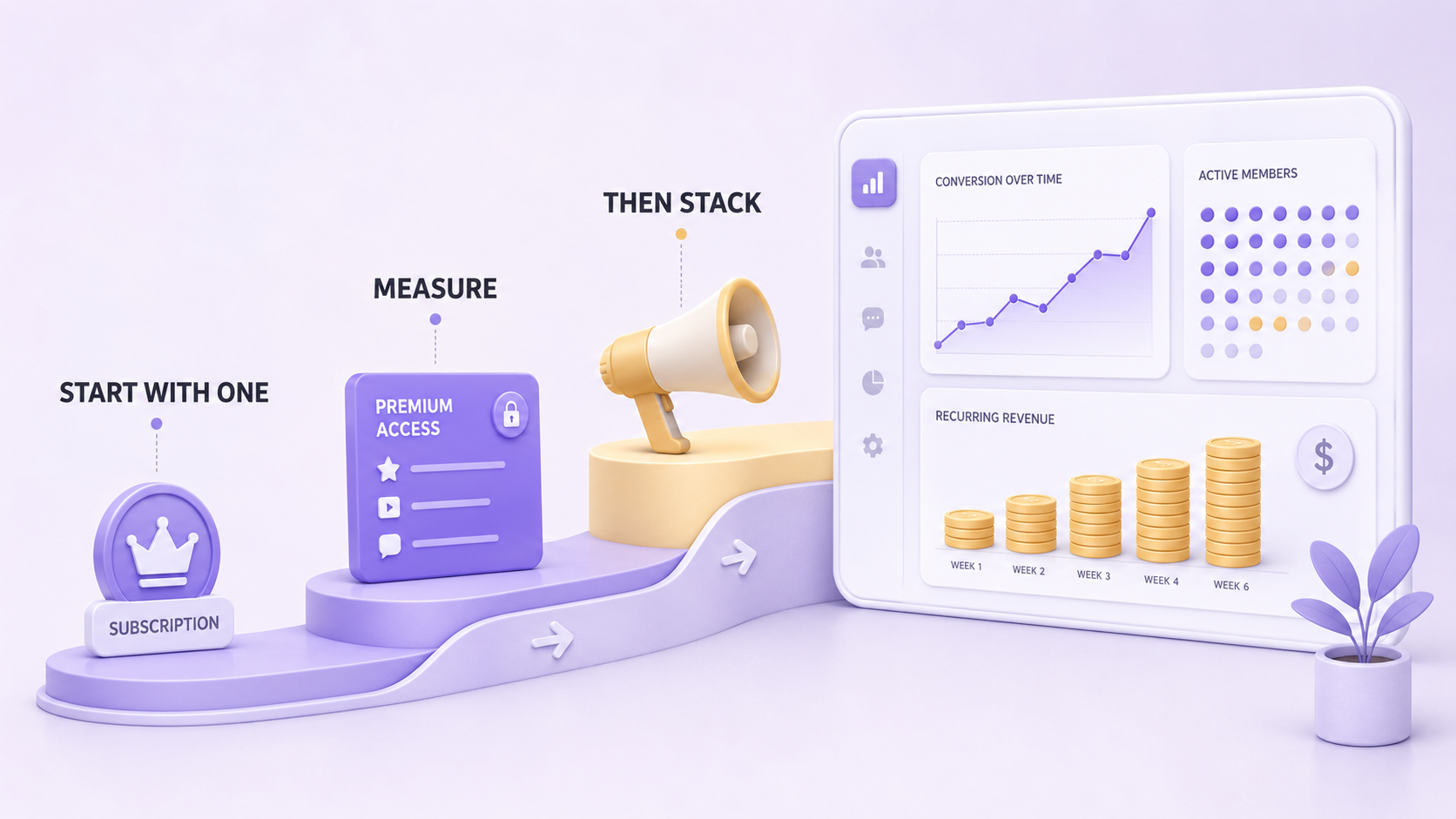
The highest-earning Discord server owners rarely rely on one method. A common stack: Discord Subscriptions for entry-level supporters, Patreon or Memberful for higher-tier access, and sponsored announcements as a supplementary stream. Each method captures a different segment of your audience at a different price point.
Track which segment is actually converting before you scale any of this. Our guide to Discord Analytics is a good framework for measuring engagement rather than just watching revenue land.
Start with one method, get it working, then add a second. Launching three monetization systems at once creates operational overhead and muddies your messaging about what members are actually paying for.
Final Thoughts
Discord is a genuinely viable platform for building a paid community business in 2026. The tools are better than they've ever been, the payment infrastructure is mature, and members are increasingly comfortable paying for community access when the value is clear.
The ceiling on a Discord server's monetization isn't the platform. It's the quality of the community and the clarity of the value proposition. Get those two things right and the revenue follows.